August 20, 2026
Muskoka Road Trip
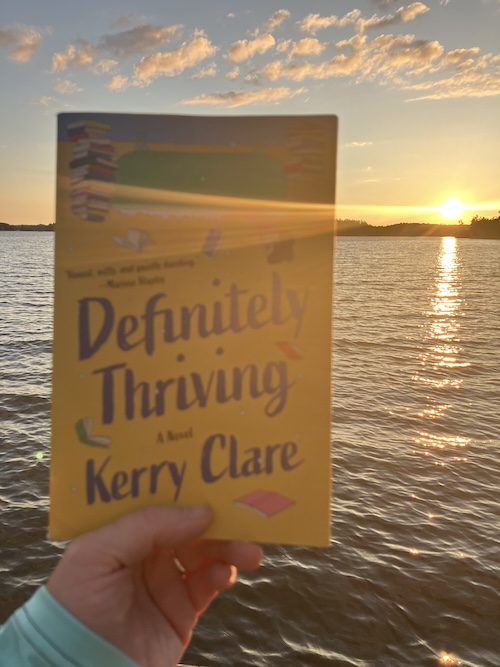
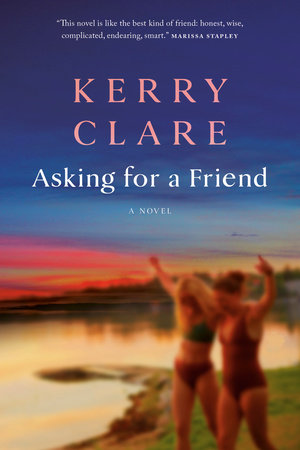
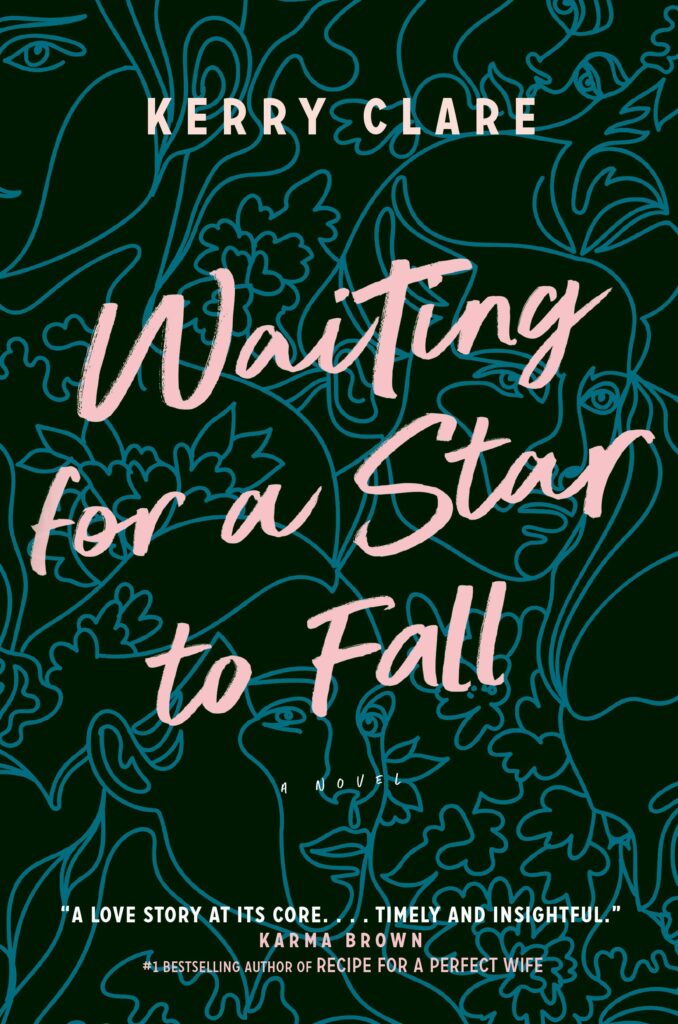
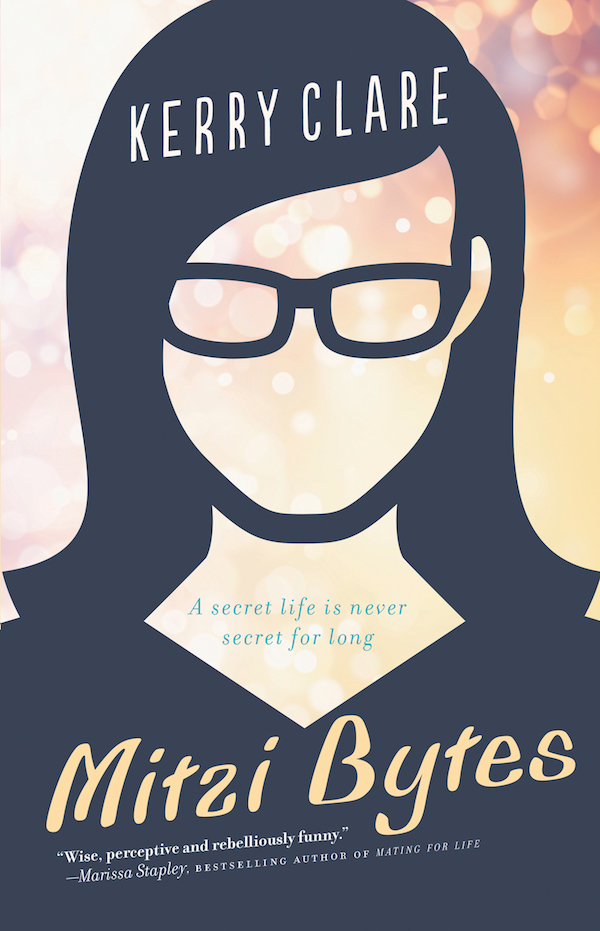
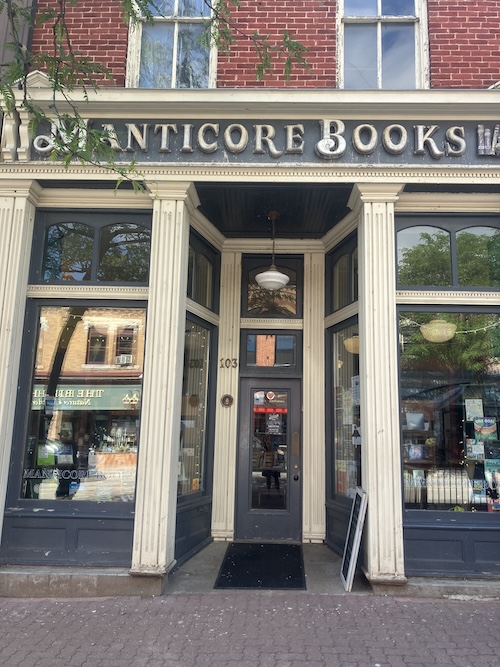
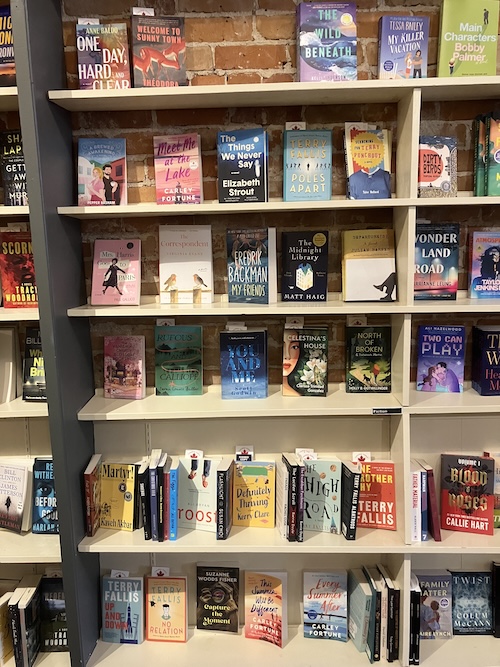
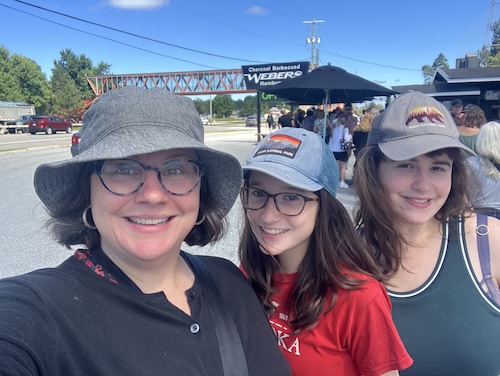
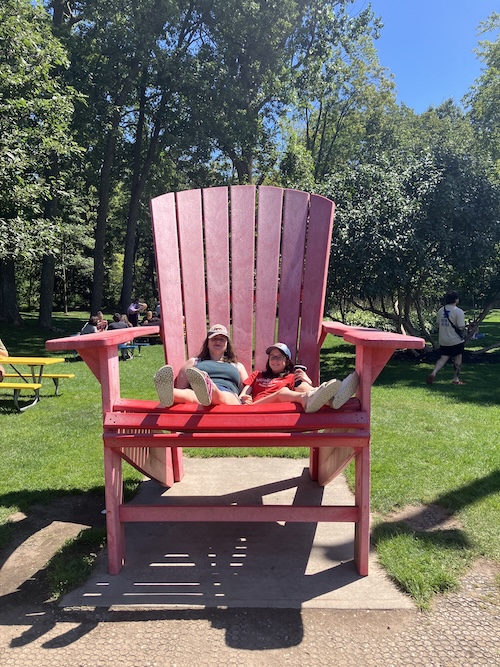
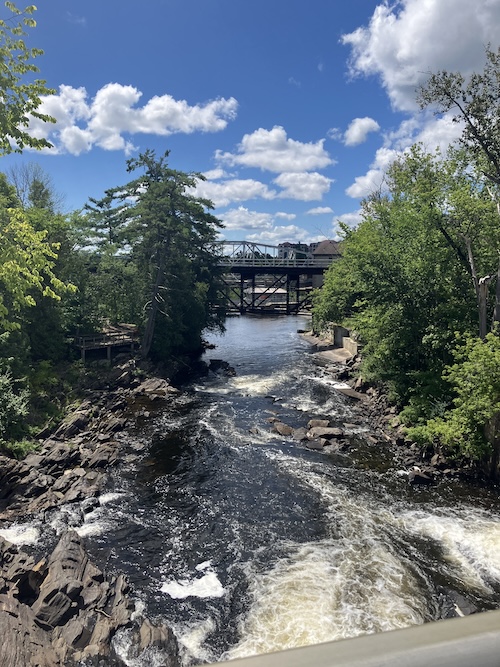
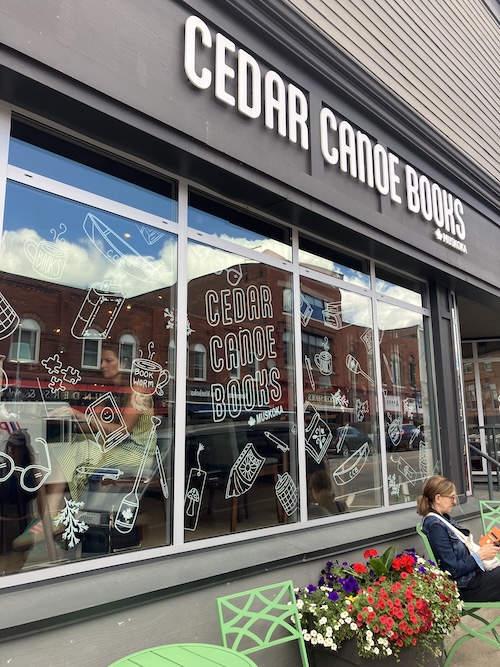
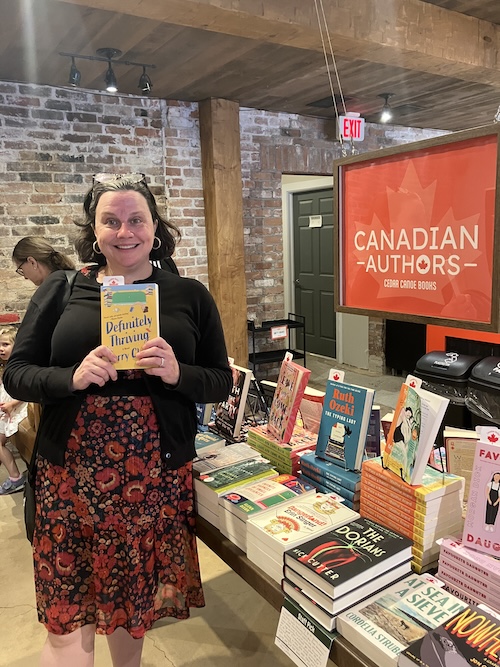
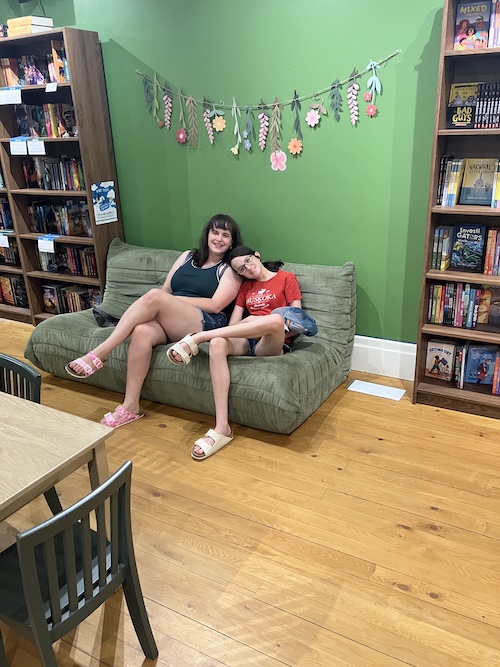
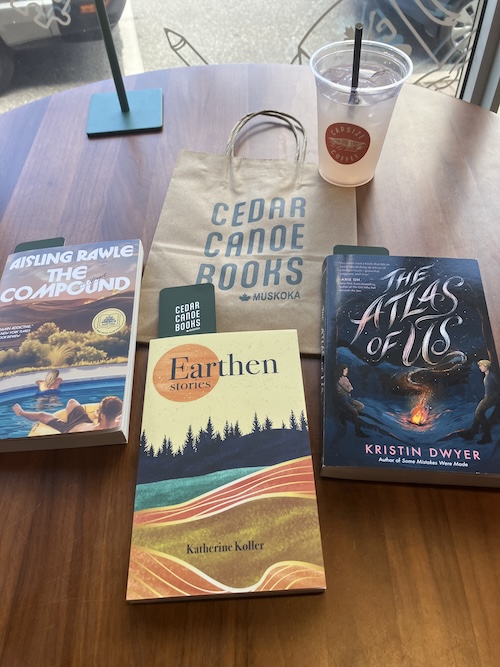
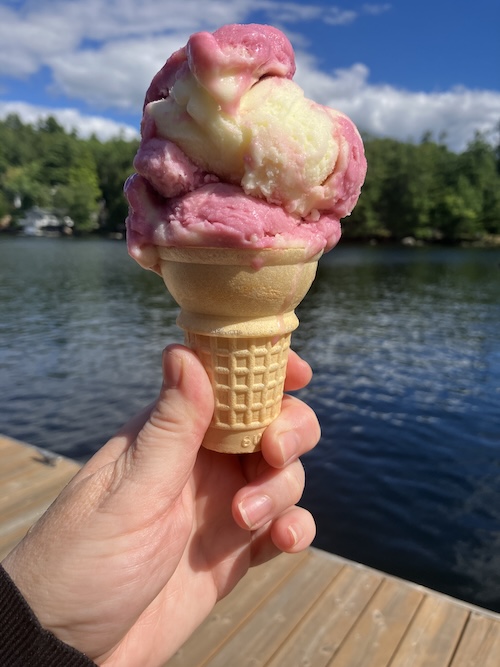
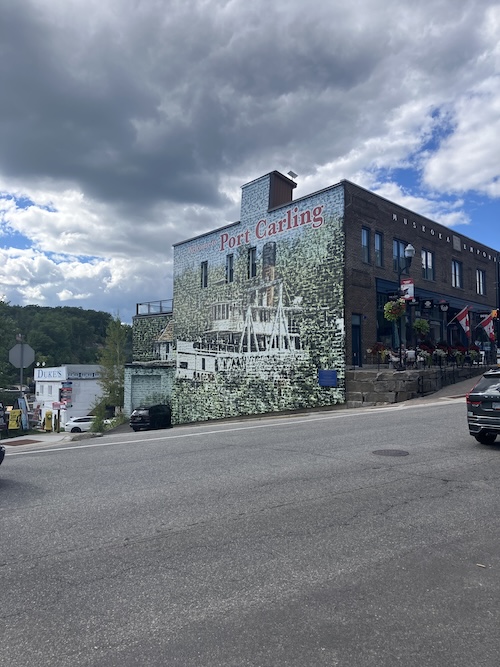
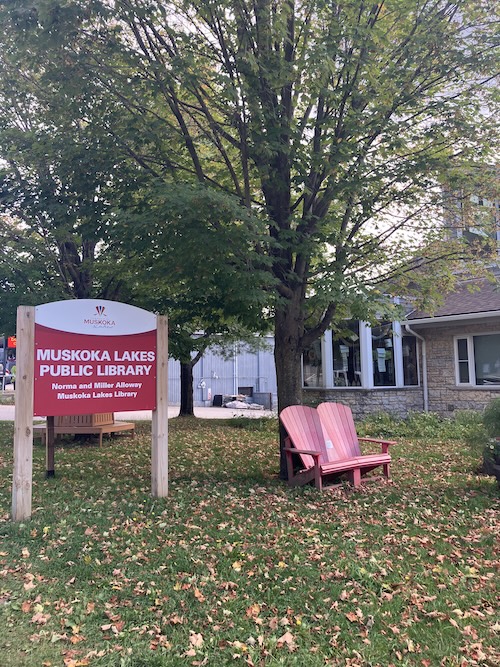
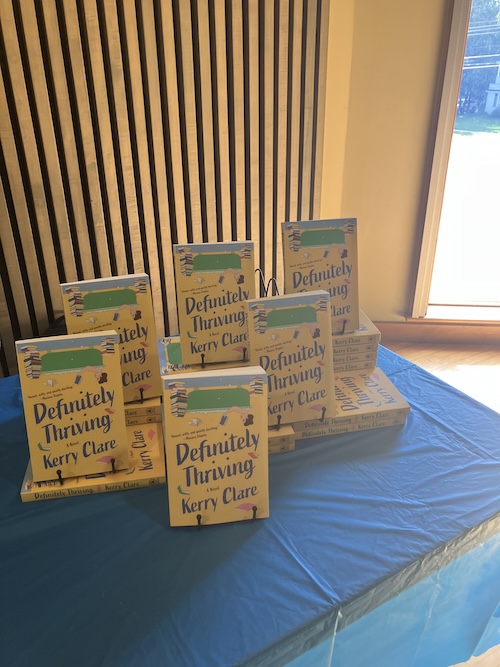
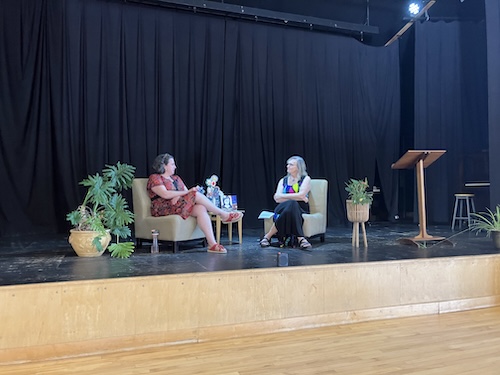
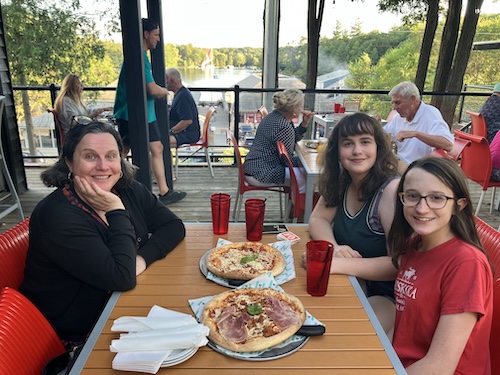
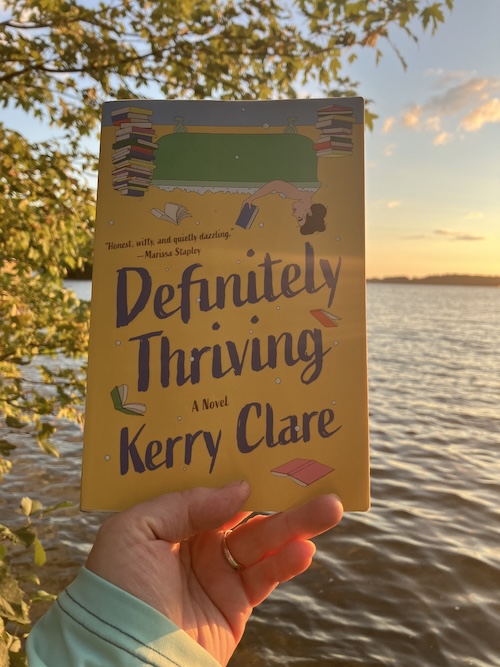
On Monday I was #DefinitelyThriving in Muskoka with the very best road trip crew—my kids! Stops at Manticore Books in Orillia and Cedar Canoe Books in Bracebridge for book signings and book BUYINGS. And Webers, of course. And then to beautiful Port Carling where Muskoka Lakes Public Library kicked off their week of 25th anniversary celebrations with a wonderful event with Cindy Watson interviewing me about my book and bringing out her Muskoka Authors Association community. I had the most wonderful time. And then dinner and a swim in Lake Muskoka. Perfection all around.
August 19, 2026
Whistler, by Ann Patchett
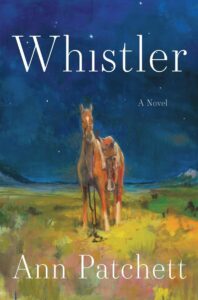
It just so happened that I ran out of things to do on Friday afternoon, which is a situation that I don’t encounter very often, and it also just so happened that I had a hammock and a copy of Ann Patchett’s new book, Whistler, with which to fill that little window of time that had just opened in my life. I’d started reading Whistler the night before, and I was already in its thrall, and settled into my hammock to savour the rest, the experience recalling the time I barrelled through most of The Dutch House in the bathtub. And I can’t help but think that this is the best way to read Ann Patchett, to eliminate all other distractions and wholly submit to the narrative, letting the novel hold you, the way a bathtub or a hammock might. I don’t have a photo of the novel taken in the hammock, my feet popping up in the background to affirm that all this is a true story, because my phone was far away, and the story of Daphne’s encounter with an elderly man at the Metropolitan Museum of Art and everything that happened after that became my whole wide world.
I love this novel. It’s so strange, and slow, and breaks all the core rules of novel writing—especially TWO CHARACTERS TALKING ABOUT SOMETHING THAT HAPPENED DOES NOT MAKE A SCENE. The whole novel is characters talking about things that happened, things that happened decades ago but what makes it so compelling is the revelations that arrive with the telling, revelations that re-frame everything the characters thought they knew about themselves and each other.
And I think it’s a novel that really benefits from singular focus, from being able to sink deeply into it. (I liked Tom Lake a lot, but I was reading it in bits and pieces, and these novels are best appreciated as wholes.) Patchett’s narrative voice is one that holds the reader so carefully, precisely, assuredly—the same way that Daphne and her stepfather were held on a hillscape all those years ago, trapped in their car which had gone off the road, stopped midway down, the car on its side, and any sudden movement might trigger the car to roll further. The same way that Daphne is held by the story her stepfather tells her during that long night while they’re waiting for light. The same way that I was held by my hammock as I read Whistler last Friday, into the evening, absolutely riveted by the strangeness of the story, the unlikeliness and specificity that makes it read as true, that makes its ending simultaneously unbearable, and also one of the most glorious stories I’ve ever read in my life.
August 14, 2026
The Fall-Down Effect, by Liz Johnston
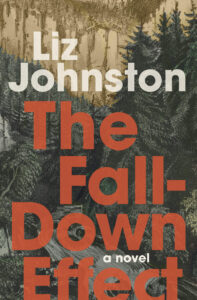
Last weekend—as wildfires continued to burn across British Columbia—was a strange and uncanny time to finish reading Liz Johnston’s debut novel, which ends with a 2020 forest fire forcing a fractured family back together again after decades apart. The story starts three decades before that, as homeschooling mother Lynn chafes at the smallness of her life raising her child in a small BC mill town, and longs for the purpose she’d found in her youth as an environmental activist in Vancouver. Her husband Tom, however, has wholly left that life behind, and worries about his wife exposing their children to off-beat ideas that will alienate and isolate them in their community.
The novel picks up again ten years later with Tom and Lynn separated and in new relationships, with their middle child, Fern, committing an act of violence in the name of environmental protection that tears their already-severed family even further apart. Fern goes on the run from authorities, while her siblings and parents (who are now separated and in new relationships) struggle among themselves to decide who’s to blame. Elder sister Sylvia’s in university studying forestry, younger brother River works as a tree planter, each of the siblings complicit in the system their sister has blown up her life to fight against, and also wise enough to know that that system, along with of notions and good and evil, is more complicated that Fern thinks that is. But is that really wisdom?
The Fall-Down Effect is not a novel that promises easy answers, or swift resolutions. The world, like the families that help comprise it, is messy and tangled, best intentions turning into disaster, good and evil intertwined, often irrevocably, and grace can be hard to come by. This is a book about both climate disaster and family disaster, the difficulty of engaging with reality as opposed to the stories we tell ourselves, and how it’s actually possible, if we open our minds, to learn to hold it all.
August 12, 2026
Local News
1) Last night, just before a sold-out production of Twelfth Night in High Park, the family of a woman called Shoshannah started singing her “Happy Birthday.” By the end of the first line of the song, the entire audience had joined in, wishing Shoshannah the happiest of birthdays. She was only just a little embarrassed, but everyone else in the crowd was delighted
2) On the Civic Holiday weekend, the Art Gallery of Ontario was packed, huge crowds partaking in “The Impressionist Revolution” exhibit, the line-up to view Monet’s “The Water Lily Pond” at least four people deep. Those people took turns. The clouds were amazing.
3) Last Monday evening, the sun was shining, the sky was blue, and Christie Pits Park was full of people using the space for their own purposes—children playing in the wading pool, old guys smoking and blasting raggae, brave souls risking life and limb with terrifying tricks in the skateboard park, kids on the swings, teens on the basketball court, hipsters with vegan picnics, and at least two birthday parties—and the vibes were good.
4) This Monday, the neighbour whose garden has turned the southeast corner of Brunswick and Ulster into a pollinator wonderland, posted photos of butterflies on his zinnias to the local Facebook group.
5) I don’t really need a reason to justify the $27 I spend at the Farmers’ Market on chicken pot pie every week, because the pies are so good, but then I learned that the pie man donates pies, soups and quiches to our local community fridges all the time.
August 11, 2026
Lighthouse Books is a Lighthouse
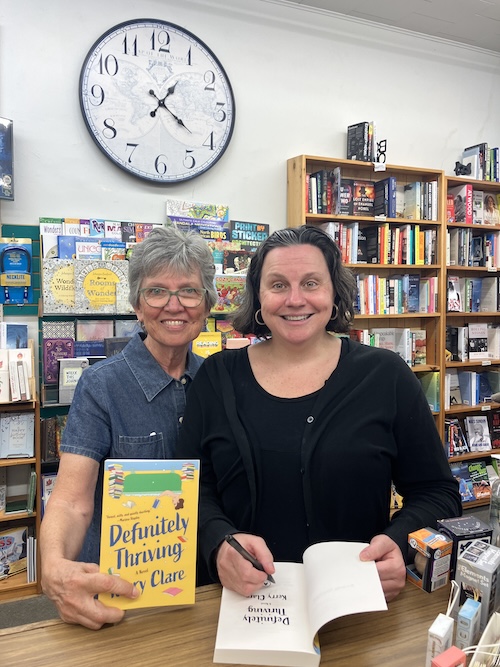
It’s been ten years since the first time we turned up at Lighthouse Books in Brighton, ON, totally by accident (I swear!), on the tail end of a weekend of camping at Presqu’ile Provincial Park, completely unaware that there was a wonderful bookstore in town. But we were fast besotted and have returned almost every year since, even in 2020 when Kathryn was selling books at a table at the door and we were all wearing masks, and she recognized me even incognito, which is just one of the reasons why Kathryn is such a wonderful bookseller. (Seriously. Who knows the name of a customer who makes one annual visit??)
The other reason is Kathryn’s taste in her books, and her focus on Canadian titles, and her highlighting of regional picks. Lighthouse Books is just such a lighthouse, really, and I was so happy for the chance to sign copies of my novel there, and to see #DefinitelyThriving on the featured Canadians shelf in such excellent company.
And then everybody in my family went to pick out one book each, except that most us chose two. I love that I have customer accounts at bookstores all across Ontario, and had acquired enough points at Lighthouse Books to save $15.00 on our latest purchase—who says that publishing is not an economically lucrative endeavour?!?
PS I might have forgotten about our first trip to Lighthouse Books ten years ago and that I’d written an entirely blog post about it, except that Kathryn had printed out that post and it’s been on display in the bookshop ever since!
August 10, 2026
Waist Deep, by Linea Maja Ernst, translated by Sherilyn Nicolette Hellberg
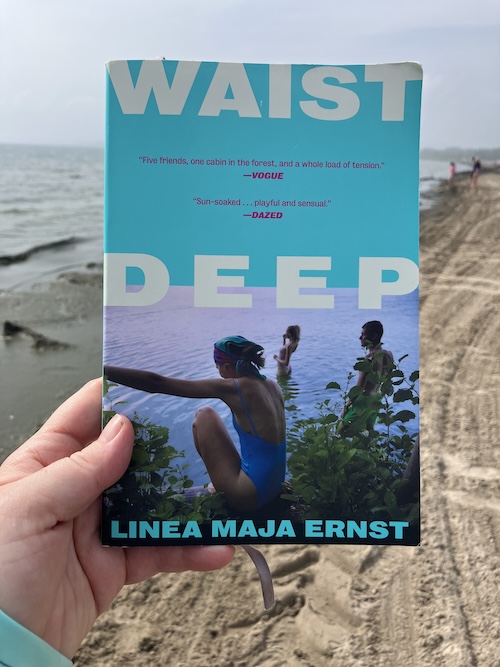
Midsummer is an idyll, a shimmering dream-scape, mirage-like, impossible to hold, and in Waist Deep, the Danish novel by by Linea Maja Ernst, translated by Sherilyn Nicolette Hellberg, it’s a moment that awakens new and wondrous possibilities. A very loose modern retelling of A Midsummer Night’s Dream, Waist Deep takes place at a Danish lake house where five university friends have reconvened with their partners and children, and Karen and Esben announce that the occasion is actually their wedding. For Sylvia, however, ensconced in a monogamy with her girlfriend Charlie, the news rekindles her feelings for Esben and the paths not chosen, and she articulates her disappointment in her friends for choosing convention and mediocrity when a decade before they’d all been intent on being radicals.
Over a week of swimming, sunbathing, talking, reading, and cooking together, the friends contemplate their connection and disconnection, a slow and dreamy narrative that’s also gorgeous and profound.
August 4, 2026
Definitely Thriving in Muskoka!
So excited for this!
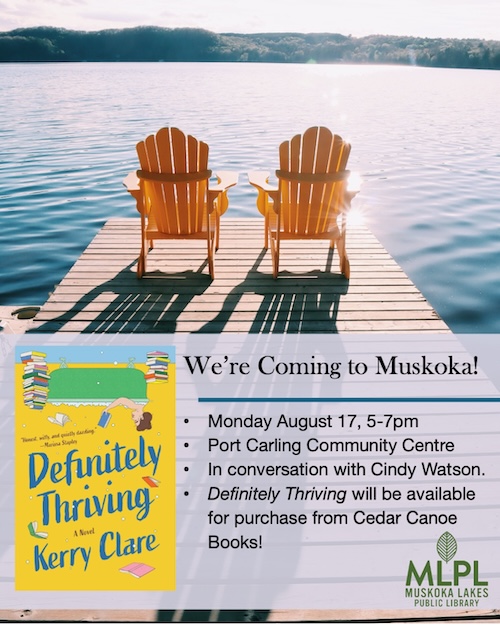
On Monday August 17, Muskoka Lakes Public Library kick off their week of 25th-anniversary celebrations with a #DefinitelyThriving author event in Port Carling, right in the heart of beautiful Muskoka.
There is no cost to attend, but please register by calling 705-765-5650 or emailing info@mlpl.ca.
August 4, 2026
The Valley of the Vengeful Ghosts, by Kim Fu
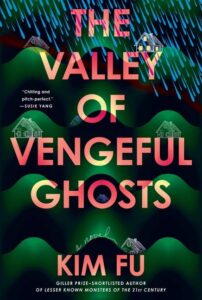
There is something wonderfully inscrutable about Kim Fu’s The Valley of the Vengeful Ghosts, in the way that the metaphors aren’t metaphors. After the death of her mother, Eleanor follows her final wish and uses her inheritance to buy a house, the only house she can afford, a model home on the site of a cursed development that turns out to be shoddily constructed, the rain pouring in, the shower draining into the chandelier in the hallways. That the house is haunted turns out to be the least of the trouble, the ghosts being figments of Eleanor’s imagination, including people who are actually alive, the clients that Eleanor counsels through her work as a therapist for an online platform.
Things were not supposed to be like this. Eleanor’s story alludes to an assault during her graduate studies, a faculty member who was never held accountable, how Eleanor’s mother stepped in and wholly took over the management of her life as she lived in the aftermath of trauma, and became trapped in a depression and helplessness from which she’s never recovered, a kind of ghost (of) herself—though far from vengeful.
As the rains fall and the water rises, Eleanor’s model home become more and more permeable, the novel heading for an inevitable climax that manages to be surprising, to offer just the appropriate amount of grace. A lesser work would make all this a statement on real estate, capitalism, mental illness, loneliness, trauma, or some other such thing, but Fu’s novel manages to have created a novel that is firmly about itself.
August 3, 2026
Mind the Gap, by Alice Zorn
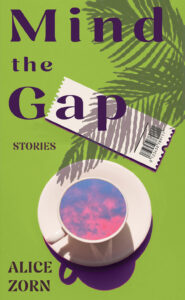
As its title suggests, the preoccupations of Alice Zorn’s story collection, Mind the Gap—which follows her 2024 novel Colours in Her Hands—are the spaces between—in terms of geography, language, understanding, and so much more. And the stories themselves are a bridge from there to here, each one cantilevered in ways that are seemingly perilous, the whole structure wobbling at moments, before landing the reader in another place that is not necessarily the intended destination.
In “Born—Died,” an adoptee travels to Mexico to investigate her origins; “Our Ladies” is the collection’s most local story, set on the Gaspe Peninsula, where a Montreal-based translator relocates into an altogether foreign culture. I loved the title story, about a Canadian woman whose connection to her eccentric German cousin unfolds and changes (but also remains constant) over decades through letters and their travels in Europe and England. A physically disabled woman is inspired by Frida Kahlo to seek what her self desires on a vacation in Mexico in “Frida Walks”; in “Not a Game,” a woman forms something of a bond with her partner’s teenage daughter while on vacation in Tunisia; a chance encounter brings a textile conservationist to go seeking in Oaxaca, Mexico in “The Land of Clouds”‘; and a man follows his ex’s last wishes on a trip through Texas in “What the Dead Want.” The final piece, a novella, “Morocco,” is the story of two friends who fly to Morocco in search of a missing boyfriend, but what they actually find there is something quite different than what they were expecting.
So many gaps—between who we are and who we want to be. Between who other people are and who we want them to be, or who we expect them to be. Between what we think and what we say, between what we say and what we do. Between what we want and what we have. Between what we owe others and what we owe ourselves.
In Mind the Gap, Alice Zorn’s narrative threads map the distance to memorable effect.
July 31, 2026
Good Company, by Kate Christensen
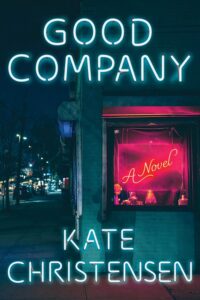
Kate Christensen’s new novel is a reckoning, and also a memoir disguised as a novel about a memoir. And as a novel Good Company is terrifically odd, but still most compelling, taking place over a weekend in which Julia Heimdahl, a midcareer writer in her 50s (whose biography resembles the author’s), attends a writers’ festival at her alma mater in the Pacific Northwest. She’s just published a memoir, which compiles her life’s most complicated relationships—with her difficult mother, her father who she witnessed beating her mother, old friends, boyfriends, her ex-husband, her new partner who’s a musician 20 years her junior. And she’s placed on a panel with a noted biographer who has recently published a memoir of his own, the vibes between them just a little off, which might have something to do with the allegations of historical sexual abuse that are on the verge of breaking.
The novel moves between encounters throughout the festival weekend—which end up resembling scenes from “This is Your Life,” past figures from Julia’s life most conveniently stepping into the story to have conversations that are conspicuously relevant to the novel’s central themes and ideas (it’s weird, but it works!) about gender, power, narrative, truth—and excerpts from Julia’s memoir. The latter underlines the ways in which Julia has made a point of being a cool girl throughout her life, someone who keeps up with the guys, who can write like a man (and also drink like one). And by the time Julia is telling her story now, she’s had enough therapy and reflection to understand how her difficult childhood helped to make her this way, but she’s not far enough along to know she can change.
Over the weekend, however, Julia begins to question her own complicity and complacency when it comes to terrible and/or predatory men, to acknowledge her own vulnerability, and confront the mixed messages she’s been receiving throughout her life about strength and power and femininity. Some of the literary figures in this novel are thinly disguised, which makes Good Company an especially juicy read, but it’s also powerful, moving, and incredibly profound.
PS I’ve been reading Christensen for a long time now, originally inspired by Maud Newton’s enthusiasm for her work. All these years later, it’s sometimes easy to forget how foundational Maud Newton’s blog was to me as an aspiring writer/literary person, a window into a world then that seemed so far away from mine.