May 25, 2026
The Great Good Places
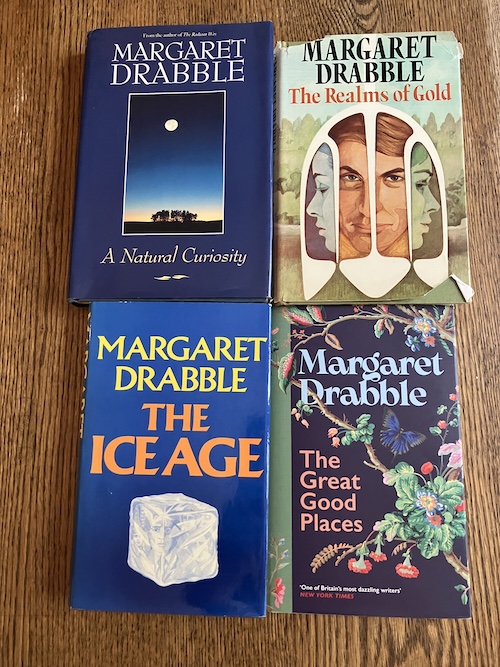
I was late to Margaret Drabble, unsurprisingly, since she started publishing novels almost twenty years before I was born, and it was only when I was living in Japan in my 20s that I fell under their spell, battered copies of her Penguin paperbacks with their faded orange spines readily available at Wantage Book in Kobe. Already somewhat dated (see faded spines: Margaret Drabble had been so CURRENT in the ’60s, chief to her appeal!) but somehow also seeming as though they contained the universe, which felt timely, as at that moment I felt I was on the cusp of my own life, including the writing career I so desired. Drabble’s intimate portrayals of ordinary lives were so tied to huge societal and existential questions, constellations that I felt as though I could map and come closer to understanding everything.
When we left Japan, I insisted on sending all my books home by sea, which didn’t make much sense, financial or otherwise, but I didn’t want to part with them. Only now, more than twenty years later, have I been able to let them go for these beautiful editions that are for more readable, first editions, no less, acquired via my mom and her voluntary work for her local library’s book sale. There’s a line in Definitely Thriving where Clemence notes that the upside of women’s fiction being so devalued is that you can collect their first editions for a bargain. And maybe now that I am nearing fifty and have become challenged by the impossible type in mid-century paperbacks, these new-to-me editions will make rereading more palatable.
The Great Good Places, however, is a first edition Drabble that is new to me, signed no less, acquired on our trip to England this spring. It’s a collection of essays and stories from where Drabble sits in her late 80s, all of it with an autobiographical bent. She tells us that her 2016 book The Dark Flood Rises is her final novel, for the death of her daughter in 2017 left her unable to write fiction anymore. There’s a sadness permeating the collection, unsurprisingly, but still the same clarity and curiosity that makes her voice her own, a writerly voice that still compels me and likely always will.
May 22, 2026
American Fantasy, by Emma Straub
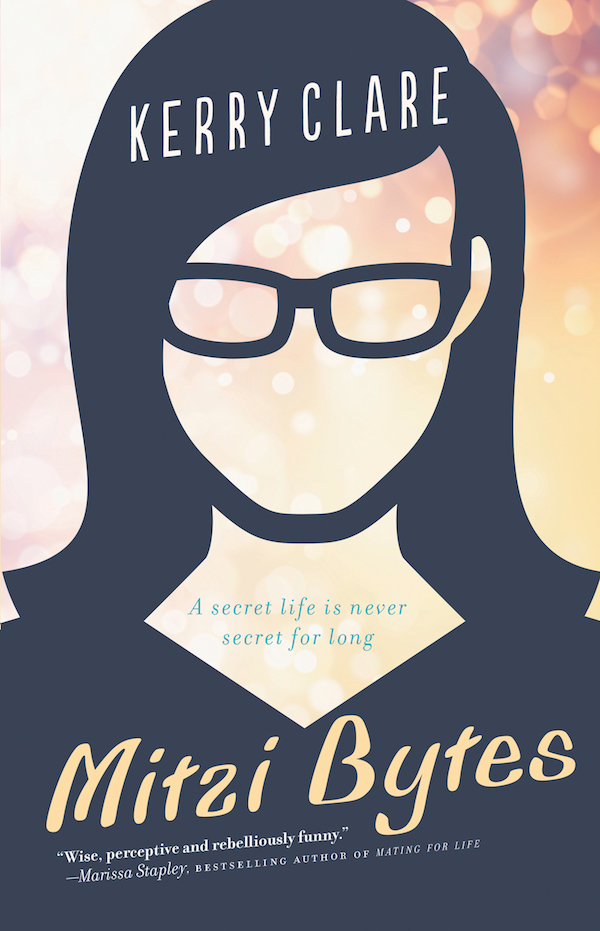
I’ve learned a lot from Emma Straub about the kind of books I want to write—her novel The Vacationers was the last book I finished reading before I sat down to begin my first novel, Mitzi Bytes, in 2014—and this is because hers are also the kind of books I most love to read. Light in the very best way, in a way that takes light seriously, this lightness coupled with real wit, and intelligence that’s equally matched with warmth. Her fictional worlds are a pleasure to get lost in, replete with complicated relationships, family drama, unanswerable questions, and a powerful poignancy.
And in American Fantasy, her sixth novel, she turns her discerning eye to notions of lightness, of pop, and escapism, all these factors melding into a plot about a nostalgia cruise ship for avid fans of a fictional has-been ’90s boy band, Boy Talk, including the boys themselves, now middle-aged, but sticking with their teenage dreams (and fans’ teenage screams) to pay the bills. The novel is told from the points of view of Sarah, head of the production team that runs the cruises with their over the top itinerary, who’s in no hurry to come home from sea after her girlfriend has just left her for a 23 year old dog walker named Plum; Anne, a 50-year-old divorcee who arrives onboard solo after her younger sister (for whom the cruise had been a birthday gift) is stuck home with a broken leg; and then Keith, one of the boys, one of the two who can actually sing, but he struggles with his demons, most of which involve his band-mate brother and his cold not-yet-estranged wife. Over five days, trapped in the unreality of the American Fantasy cruise ship, these three characters’ lives intersect in surprising and meaningful ways
Life is long and complicated, in a way that the lyrics to those ballads the boy bands sang (but didn’t write—and which fans can still immediately recall 30+ years later) never alluded to. American Fantasy is about how the reality never measures up to the promise, and what else might be possible in the space between.
May 20, 2026
Suddenly Light, by Nina Dunic
“Remembering my grip on her arms, hurting her, wanting to shake her, hard, so she would stop being drunk—wipe her face, so she could participate like the rest of us. Participate, like all of us. Didn’t she get it? We didn’t want to be here either. Somewhere between the turquoise eyes and the brown smear were the rest of us.”
Nina Dunic’s short collection Suddenly Light—which follows her award-winning debut novel The Clarion—troubles the space between people, ourselves and others, sometimes perfect strangers, and other times the people we’re closest to. A quiet sadness permeates these stories, but there are moments—like the title says—of powerful illumination, of sometimes fleeting connection. Though these moments are never the crux of things, because the point of Suddenly Light is that life goes on, much longer (and darker and harder) than anyone anticipates at the beginning of it all, when you’re young and on the cusp of everything, the future only possibility, no such thing as compromise. Narrative never quite unfolds the way we imagine it will, and Dunic’s stories show this, the ongoingness, the granular attention to detail, the strangeness and randomness, what participation requires of its players, how much is felt but never said.
May 19, 2026
Summer Has Entered the Chat
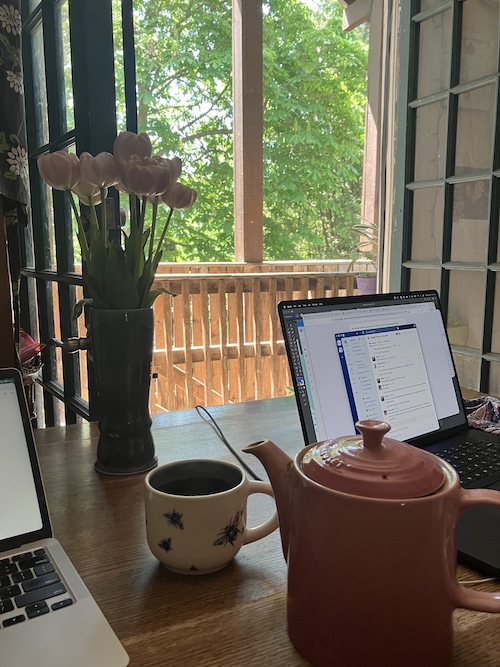
The windows are open and so’s that door, flung open wide to all the GREEN of the forest just beyond my kitchen, home to cardinals, sparrows, very loud robins, and sometimes finches and a ruby throated kinglet, among others. (Can you tell that I recently downloaded the Merlin app?) Summer weather has arrived after a chilly spring, and I’ve even had my first dip of the year in Lake Ontario yesterday, which is not to say that it was pleasant. The porch has finally been tidied, hostas planted in the pots by the door, and while I’m still waiting for green shoots to emerge and worrying that this is the year my seeds won’t grow, it’s nice enough to sit outside and at this specific moment in time, for the first time in YEARS, there doesn’t seem to be a construction site around my house (at least not YET) to ruin the breezy vibe outside.
I’ve taken Instagram off my phone after three months of enjoying it for book promo purposes. And enjoy it, I did. I’ve actually determined that the problem with Instagram, for me, isn’t a problem in extraordinary moments, and in the last three months there’s been so much to share and celebrate. But instead social media drains the meaning from the quotidian for me, turning it into content instead of lived reality, and it means I get unattached from it all, more attached to how it looks on a screen instead. Perhaps the difference with the extraordinary moments is that I’m never going to be altogether attached to them, that they’re always going to feel a little unreal, and capturing and sharing helps me remember that it happened. But with, just say, that light on my kitchen table, or the way the breeze feels in my hair just now, my job is to be present, to go deeper, just to be.
And that is my job now too as book promo season is winding down and I have some time to breathe, to stop. (To sleep!) To ease into summer, although I don’t know if it’s ease because I’ve been so busy these last few months that summer has arrived abruptly (and the weather really has!) and my children need new clothes and shoes, and it’s a lot. I’m tired, and everything is a lot. Although at least the hammock in my backyard is finally set-up, which is perfect.
It’s the time of year where my kitchen is redolent with lilacs from several backyards over, and everything seems like a miracle.
May 19, 2026
Immortality is Perhaps Unreasonable
I wrote this last Wednesday, and it appears in my latest ENTHUSIASMS newsletter. You can subscribe to ENTHUSIASMS here!
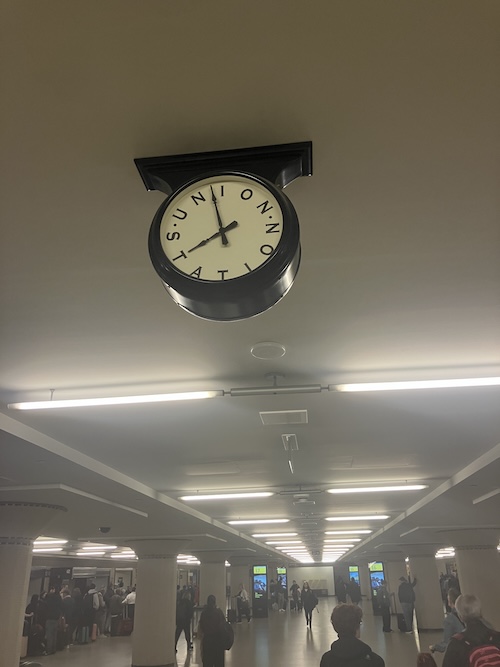
I’m writing this message on a train, somewhere between Belleville and Kingston, en-route to the first of two sold-out events this week which will cap off my spring of abundant book promotion (which started here). Which is the way I’m choosing to frame things, even though I’m relatively sure that my presence is not the reason why these events have proven popular, but I’m pleased to be hitched to success however I can manage it; one mustn’t quibble. And I’ve had a very good time this spring, almost all of my events well-attended (or well-enough), every one of them fun and inspiring, opportunities to connect, a good use of my time.
And I’ve been thinking a lot about publishing a book and what it means, and what we can expect expect from the experience, concluding that immortality is perhaps unreasonable. If it sounds like I’m being facetious, I’m not.
In his most recent book, Time Management for Mortals, Oliver Burkeman wrote about reading and rivers in a way that shifted so many things for me, about holding on, and letting go, about relinquishing control, and being free. And what he wrote was that we must think of our to-be-read piles as a river of reading rolling by that we can dip into, instead of a more imposing project that requires completion. There is no completion, there is no arrival. We’ll never do it all, and so accepting that—and that this singular moment in time is what actually matters, what you’re doing now instead of what you’ve done or what you still need to do—is to release the weight of the world from our shoulders.
I’ve been thinking about the books I’ve written in a similar way, accepting the transience of it all. Which came about when I was perusing my blog archives from 20 years ago and found reviews of books I loved and had thought deeply about at the time and which I can no longer remember having read or even knowing about at all. And accepting the same about my own books—that many people will never ever read them, and that even those who do and love them might not hold my books forever—is actually fine, and I don’t have to beat myself up for my books’ ephemerality, because all books are ephemeral (all THINGS are ephemeral), even the SERIOUS LITERARY BOOKS written by the pen of men, or the runaway bestsellers that years later turn up as boxes upon boxes at library book sales.
And maybe this is an easier fact to accept when it’s accompanied by a feeling that my novel has had a warm welcome into the world, that it’s found its way into the hands of readers through avenues outside my control, that I don’t necessarily need to orchestrate everything, that when I say I’m willing to let it go, I actually realize that this isn’t synonymous with “let it disappear.”
I used to celebrate my book birthdays. I used to bake a chocolate pie in honour of my first novel. And at a certain point this ritual stopped being meaningful to me, and I realized that it was me trying to cling to some intangible thing, and eventually I stopped clinging.
May 15, 2026
For the Love of Toronto
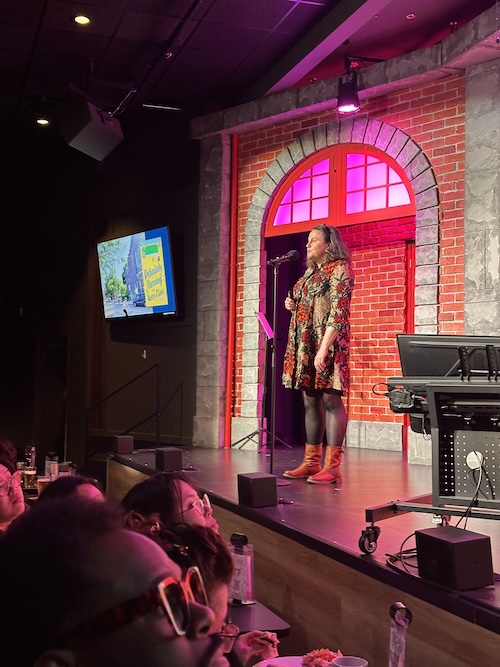
When I received the opportunity to be part of the For the Love of Toronto/Toronto Confessions event from the Museum of Toronto, I said yes without thinking. And then I did think, and panicked, and sent a note to Emma, my publicist at House of Anansi Press: “OMG, just checking, this is real, right? It occurs to me that if the AI scammers wanted to get to me, this would be the way to go!!” Because it does seem like it could be too good to be true: the chance to perform on an iconic stage for an up-and-coming cultural institution, to tell my story of this city where I’ve lived for half my life, to do so alongside eminent Torontonians, including event host, the nation’s BFF, Elamin Abdelmahmoud.
But Emma confirmed that the event was indeed legit, that she’d pitched me for it, and I couldn’t have imagined a more beautiful way to cap off this season of busy book promotion (for which Emma cannot receive enough credit for all she’s done).
I was also excited by the opportunity to try something that was new to me, totally outside my wheelhouse. To tell a story of this city in a seven minute presentation, create 15 slides, to recite the whole thing off my heart—but was my nearly half-century-old brain even capable of such feats? Could I tell a story remarkable enough to be worth people’s time, even though my experience of the city is a fairly pedestrian one (and not even in a cool flaneur way)? There were moments where I was preparing and feared I was out of my depth, that I would make a fool of myself, that this might be a story of triumph and adversity in which the latter came out on top.
But readers, I did it. Last night triumph was had. And yes, yesterday was perhaps the most iconic day of my entire life as I began it with a 7am swim in the art-deco pool at the Chateau Laurier in Ottawa and finished it on stage at The Second City in Toronto delivering my talk, “Holding It All: The Good, the Bad, and the Ugly,” about learning to hold the city in all its fullness, seeing the holy in the humble, on how we have to persist in loving with this imperfect city because our frustration (underlined by anxiety about a city that’s changing all the time) can be too easily hijacked by people who want to profit from our fear and disunity.
The other speakers were wonderful, hilarious, inspiring, and it was an honour be among these others (iykyk). The audience was so warm and responsive. The Museum of Toronto is so fantastic.
And I am so so lucky.
May 12, 2026
The Things We Never Say, by Elizabeth Strout
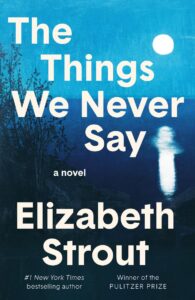
Don’t let that Elizabeth Strout has followed up her novel Tell Me Everything with one called The Things We Never Say make you think she’s shifted gears. Although she’s left Maine behind, and the familiar cast of characters—Lucy Barton, Bob Burgess, Olive Kitteridge, and others—who’ve populated her stories over the past three decades are absent from the book. In fact, yes, The Things We Never Say seems set in a different universe altogether, one in which Strout’s beloved literary people, Bob et. al, are fictional (CAN YOU IMAGINE!?), because there’s a reference to her main character, Artie Dam, reading a book “about some crotchety old woman from Maine,” which is clearly Olive Kitteridge. “People die of loneliness,” Artie recalls the woman in the book thinking. “It happens all the time.”
But what this quotation reveals is that this latest book is still familiar territory for Strout, territory she’s mined before—the unknowability of other people, even those who are closest to us, how alone we can feel within intimate relationships, the depth of mystery contained within each and every one of us. This is territory that Strout will likely never stop mining either, which is fine with me, because what she writes reads like answers to questions I will never stop asking, and I’m glad she’s wondering too.
Artie Dam is a man akin to Bob Burgess, a man with feelings, many of which he’s unable to express. He’s a beloved high school history teacher and it’s 2024, which is a hard time to be a student of history in the United States of America, to have one’s eyes open to what’s happened and what’s going to happen next. The great heartbreak of his life is a car accident when his son was a teenager that killed his son’s girlfriend, and changed everything for their family, especially the dynamic between Artie and his wife. But then Artie learns something about his past that changes everything he thinks he knows about his family, and Artie has to figure out what happens to that, a problem that’s aligned with questions he keeps asking himself about the nature of free will.
This is a novel in which not much happens at all, or rather it happens in such a way that it’s easy to overlook that everything happens in this book, life, death, betrayal, heartbreak. But also redemption, hope, possibility, (sometimes) connection. This book is wrenching in the same way that being alive is, and similarly it’s so deeply worth the ride.
May 11, 2026
calling down the sky, by Rosanna Deerchild, translation by Solomon Ratt
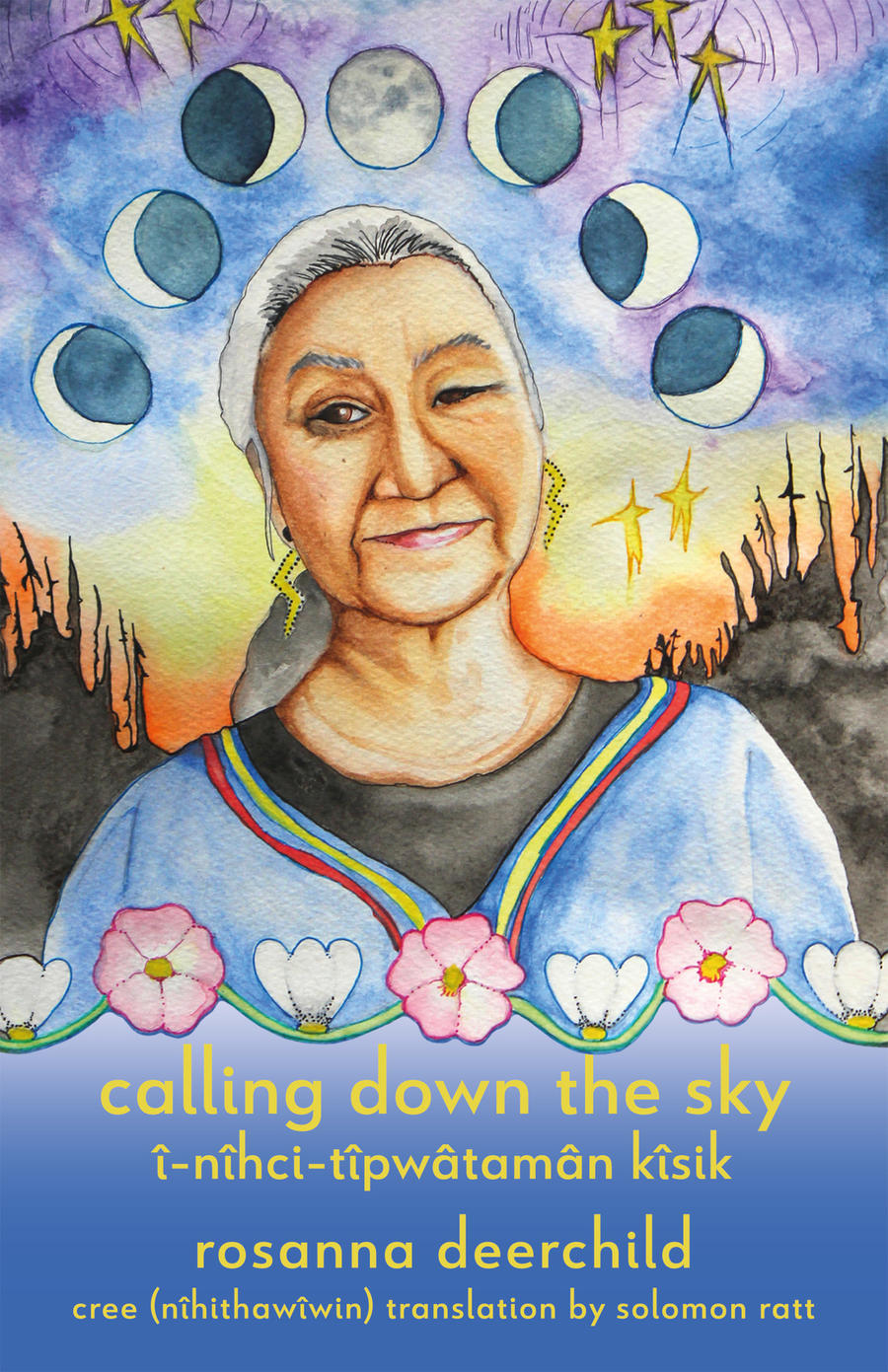
“there is no word for what they did/ in our language/ to speak it is to become torn/ from the choking”
A perfect and poignant Mother’s Day read this weekend was the recently released 10th-anniversary edition of Roseanna Deerchild’s poetry collection calling down the sky, with a Cree translation by Solomon Ratt. The poems are in Deerchild’s mother’s voice and tell the story of her experiences of residential schooling with a simultaneous candour and remove (“people ask me all the time/ about residential schools/ as if it’s their business or something.”) Following the deaths of her parents, Deerchild’s mother attended 3 residential schools from the age of 5 to 14, where abuse and neglect were rampant, the trauma living deep in her bones ever since, manifesting in her health troubles and memories that are hard to face. These poems stare down the brutal realities of these institutions, the inhumanity baked into the system, the depravity and cruelty inherent in the quotidian experiences of the children who were forced to live there. But Deerchild also shows the subtle ways in which the children were able to exercise subversion where they can, the title poem about the night sky and the northern lights which the children know and understand due to their own knowledge of place, but “never seen/ that priest run so fast/ as though the devil himself was chasing.”
May 11, 2026
Last week the internet went crazy
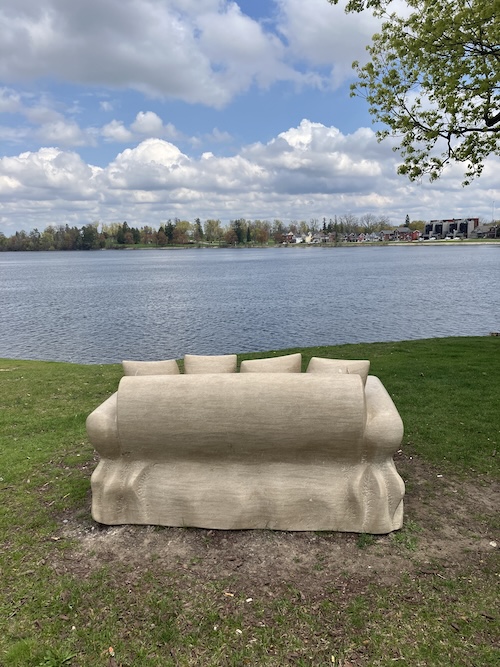
Last week, the internet went crazy. And I was so interested in the way that the internet went crazy, because instead of being in the crazy fray (where I use to hang out all the time!), I was looking on from the sidelines, in more than one sense. The most obvious sense being that this was a fracas among the children’s lit internet, of which I am not a part, so I had no skin in the game, the game being a comment by children’s writer Mac Barnett (from his recently released book on writing for children) in which he reports that “maybe more like 94.7 percent of kids’ books are crud.”
The thing I found most fascinating about this comment was how 94.7% of children’s authors in my feed seemed to believe without hesitation that their books were the books that he was talking about. I mean, the odds are high that they were, 94.7% being a sizable piece of the pie, but still. No doubt there is a gendered element to this. I’m not a children’s writer, BUT I was once a student in a university department of English, and I think the dynamics are the same, which is that 94.7% of the students are women and it’s the 5.3% of students who are not who are lauded as geniuses, dominate in-class conversations, and receive post-doctoral fellowships. So I suspect I understand why the community finds itself with a chip on its collective shoulder.
But still. I find myself thinking, “Can you get a little bit of male entitlement, people?” We could all do well sometimes (but not all the time) to channel the spirit of that guy who’s released an obscure book with a small press nobody has ever heard of that sells six copies and who is wide awake the morning of the announcement of the Giller Prize longlist waiting for his moment, and who’s indignant when they fail to call. As a writer of commercial fiction, I understand parts of what it must be like to be a kidlit writer (not being taken seriously, your poetry colleagues from your MFA have never published anything but still think they’re better than you, male writer colleagues with literally no interest in ever reading anything you’ve written), but we’ve got to hoist our spirits high above these petty grievances and/or get our heads out of our asses.
I know all this because of the years of my life that I wasted being triggered by things Jennifer Weiner was saying on the internet. It was my PRIME, people, and I spent it in the comments of Blogspots, either being really mad at Jennifer Weiner, or defending Weiner from her naysayers, and I don’t really remember why my views on Weiner were so all over the place, but also she was a lightning rod so it almost didn’t matter, and now I think about all the things I could have been spending my energy on instead.
The greatest revelation I’ve had in recent years is that so much of the frustration across the entire political spectrum (and also in my nervous system) is the result of fury that we cannot, in fact, control the things that other people think or the ways they behave. And this revelation lives alongside another fact that is just as true, that is we must keep working for a better, fairer world, not merely accepting the status quo. That we must change the world, but also there are parts of the world that are not ours for changing. That other people are going to think things, and say things, and I’m not going to like the things they think or say, and this is—in fact—part of the schema.
And yes, I’m talking about cancel culture, but I’m also talking about the people who were so opposed to cancel culture that they became their own cancel culture (which was a thousand times worse than campaigns removing men from positions of power for being sexual predators, no?).
It’s a mess, it’s a muddle, and I don’t really know a way out of it, except to shut down your browser when those synapses are flying and you find yourself in an internet pile-on, and go for a walk outside.
May 8, 2026
When It Isn’t Easy
I’m writing a novel right now, and I’m having a hard time. When I’m writing first drafts, I’m usually firmly wedded to forward momentum, just get to the end already, but things have gone off the rails a bit where I’m at, 52 000 words. Or maybe I’m still on those rails but the rails aren’t properly fastened to any foundation, and the narrative is all over the place, and/or no place at once. There’s not a proper focus, a proper through-line, I don’t know my secondary characters well enough, the narrative has disparate elements that need to be pulled together. There are some fundamental mysteries that I need to solve before I’m ready for this story to get where it’s going, and so I’ve gone back to the start for rewriting and reweaving—and I’m really just overwhelmed.
Part of this is because Definitely Thriving flowed so easily, and I was conscious as I was writing that this was something special, and I really feel the absence of that ease this time. Although there was so much ease that I don’t properly feel like I wrote the book at all, instead it poured out of me like magic, and I’m not really sure how to do that conjuring trick again, which is terrifying. And finally, I’m scared because I spent last year writing a story that was never going to turn into anything, and once I stopped writing it, I was just so grateful to be done, and now I’m just nervous that this will be how it goes now, me driving my creative truck straight into a brick wall over and over again.
Next week, I am taking part in a very cool storytelling event produced by the Museum of Toronto called “Toronto Confessions: Love it or Hate It” (tickets on sale now!), an opportunity I said yes to because it was just so damn cool, in really exciting company, the sort of thing I’m always not-so-secretly jealous that I’m not constantly being asked to do. But it’s totally not in my wheelhouse, so far out of my comfort zone. A different kind of story making than I’m used to, with different narrative tools and structure, and I’d have to memorize it all—is my brain even capable of this? I really wasn’t sure. And as I began to put my presentation together, I was so afraid that I’d only embarrass myself, that I wasn’t cut out for this. It’s not very often these days that I try something new.
Except that lately I’ve been trying new things a little more often, my springtime so far filled with travel to new cities, brand new twists in schedule and routines, even just little things that challenge me and make me realize that my capacity might be greater than I think (except for the days when I’m really tired). I don’t want to jinx my presentation next Thursday, and I’m still terrified that I’m going to make an ass of myself, but it’s looking more likely that I will show up and be basically adequate (and hopefully better). It’s been fascinating to make something new, to start from nothing and learn how the pieces fit, how to structure and edit my ideas in a new format, even if it’s been super scary, like walking a tightrope without a safety net. Because how do I really know I can do it? But then I figure it out, and realize I’m starter than I think.
Like maybe even smart enough to figure out how to write this novel? And maybe instead of letting the difficulty become my atmosphere, the air I breathe, I can see this tricky phase as part of the process, a tangle to be unknotted, a problem to be solved.
How do I really know I can do it? (GULP)
I don’t. Until I do. (Or at least I hope I will!)