December 31, 2015
New year, new books, new teapot, etc.
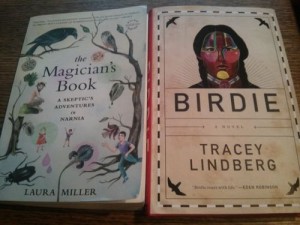 We have had a stupidly crummy holiday, mostly for non-monumental reasons. A year ago I wrote this post about our family’s talent for leisure and enjoying ourselves—we were skating, movie-going, relaxing, lunching, going offline for an actual week, etc.—but we were showing none of those tendencies this time around. Things got off to a good start, but Harriet came down with a stomach bug on Christmas Eve that stayed around for a few days. Iris stopped sleeping over Christmas, and was conspiring to kill me. Stuart was diagnosed with strep throat, and while I was pretty well post-pneumonia, I was so tired and crabby. We weren’t terribly ambitious then—some days our big outing was to the grocery store. Though there were a few highlights—before it all went wrong, we had a fun day downtown(er) and got to visit Ben McNally Books, where I picked up Birdie by Tracey Lindberg, which I’m about to begin as soon as I publish this post. We had nice visits with my parents, who braved our company. Lunch at Fanny Chadwicks yesterday, though Stuart is still unable to eat solids, so he didn’t have the greatest time. Tonight we’re going to our friends for a New Years get-together, though we won’t be staying too long (and I am sure nobody else at the party is too upset about that. We’ve become social pariahs).
I did, however, get a lot of reading done, mostly because my evening companion took to going to bed at 8pm, and I took a holiday from work things and read all through nap times (bliss!). My holiday reads were not at all disappointing, mercifully, and I look forward to writing a post about them this week. My final read of the year was a gift from Stuart (who got me so many excellent bookish things), The Magician’s Book, by Laura Miller (and we’re going to be starting Prince Caspian in a few days and I am so excited). My final read of 2015 then, followed by my first read of 2016—Birdie. I really want to keep a focus on reading First Nations women writers.
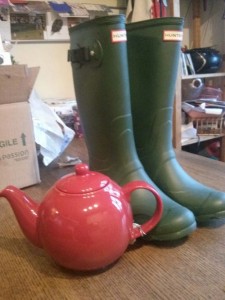 Anyway, a disappointing holiday is winding down on the right note. Iris’s weird rash (of course she has a weird rash!) is clearing up, if that’s any indication. Today I did receive the great joy of not only a pair of Hunter wellies in the post, but a brand new teapot. And why did I need a teapot, you might ask, seeing as I came into possession of the greatest teapot on earth just six months ago? Well, on Christmas Day, my teapot got smashed, which led to sulking and petulance on my part, and put a damper on our holiday on top of everything, because I am shallow and materialistic. (But it’s a teapot! Not just any ordinary material.) The bright side of your teapot smashing though is that you get to wait for a new one to come in the post. (I wanted a London Pottery teapot, you see.) There seemed to be no more white polka-dots to be had for love nor money, but I was able to order a plain red one from the shop I’d bought the last one from in Bobcaygeon. And it arrived quickly and intact, alongside my new wellies which replaced a) the wellies I’d got for Christmas that didn’t fit and b) the wellies my mother-in-law bought me for my 26th birthday a decade ago and whose image was for a time my blog header and can still be seen if you scroll all the way down to the bottom of this page, and which finally started leaking after many years of service. So things are certainly on the up-and-up.
I’ve had a good year, even though it’s gone out with pneumonia (but then having pneumonia was terrific, from a reading point of view…). I am pleased that I sold my novel and am excited to turn it into an actually book over the course of this year, though I still can’t quite believe that’s going to happen. I read a lot of good books. I had a splendid trip to England, the land of teapots and wellies. I learned to write profiles, which was a new challenge—I wrote about Julie Morstad in Quill & Quire and have a cover story forthcoming in my alumni magazine. I’m pleased with my review of Marina Endicott’s new novel in The Globe and really, really proud of my essay on Ann-Marie Macdonald’s Adult Onset, which was another challenge and I’m so happy to have met it. I want to keep expanding my writerly horizons. Readerly ones too.
This fall has been exhausting. When I look back, it seems like getting pneumonia was inevitable. It doesn’t help that Iris’s sleep is so patchy, as it’s ever been. My resolution for 2016, if I had one, would probably involve getting more sleep, if that weren’t at the expense of so many things, but I will make an effort. It might also involve baking fewer cakes, but this kind of thing is why I don’t go in for resolutions in the first place.
Happy New Year to you, and thank you for reading!
October 7, 2015
No wonder the children grew peaky
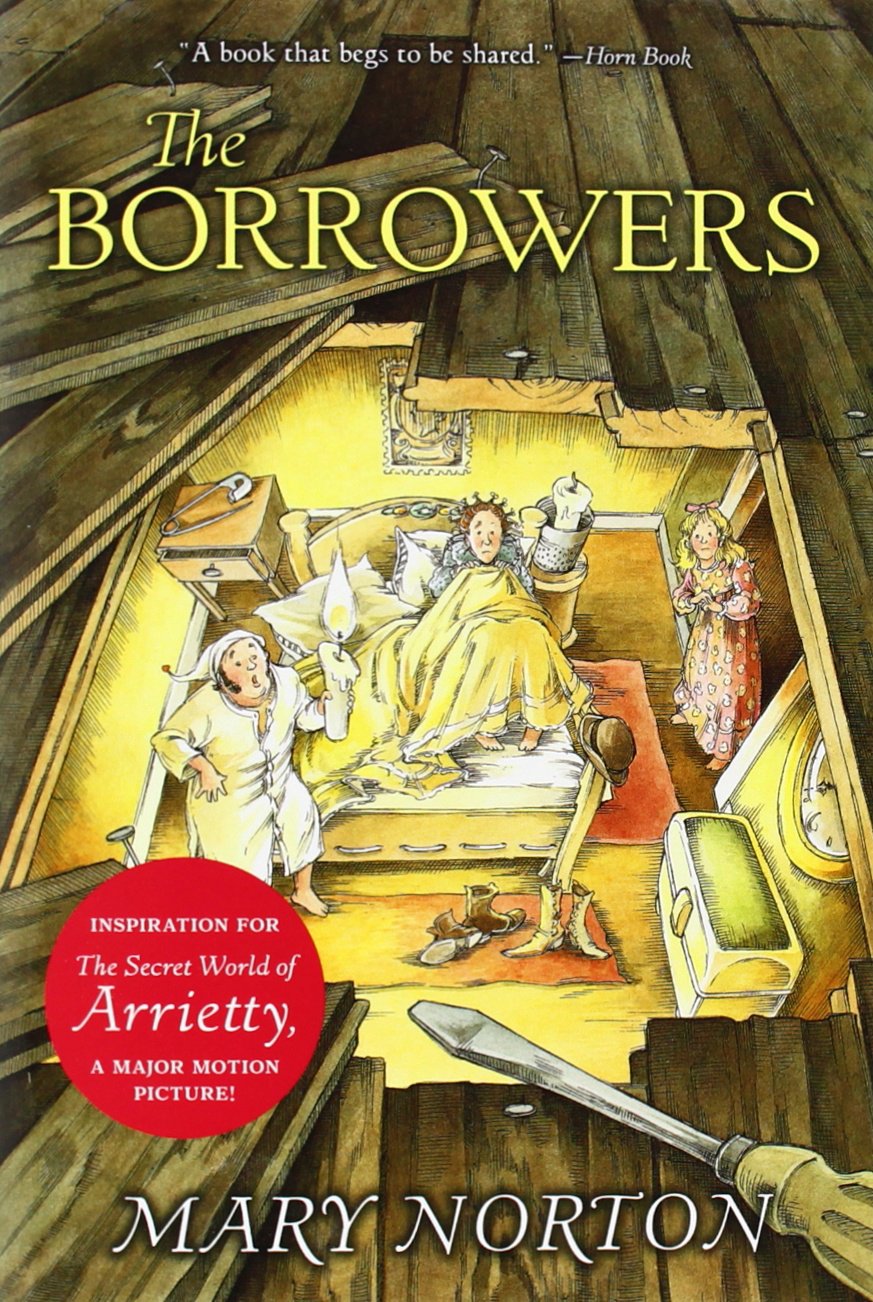 “So he didn’t have your advantages,” went on Homily breathlessly, “and just because the Harpsichords lived in the drawing room—they moved in there, in 1837, to a hole in the wainscot just behind where the harpsichord used to stand, if ever there was one, which I doubt—and were really a family called Linen-Press or some such name and changed it to Harpsichord—”
“What did they live on,” asked Arietty, “in the drawing room?”
“Afternoon tea,” said Homily, “nothing but afternoon tea. No wonder the children grew up peaky. Of course in the old days it was better—muffins and crumpets and such, and good rich cakes and jams and jellies, And there was an old Harpsichord who could remember sillabub of an evening. But they had to do their borrowings in such a rush, poor things. On wet days, when the human beings sat all afternoon in the drawing room, the tea would be brought in and taken away again without a chance of the Harpsichords getting near it—and on fine days it might be taken out into the garden. Lupy has told me that, sometimes, there were days and days when they lived on crumbs and water out of the flower vases. So you can’t be too hard on them; their only comfort, poor things, was to show off a bit and wear evening dress and talk like ladies and gentlemen…” —Mary Norton, The Borrowers
(We’re reading this right now and I’m loving it so much. I don’t know that I’ve ever read it before. When I was a child, I was into the American knockoff, The Littles, but I had no taste, and Mary Norton is so clever, funny and bright. I also like our copy because the cover is by Marla Frazee, who is one of my favourites. And sort of related, we recently finished reading The Lion the Witch and the Wardrobe, which went over very well, except that Iris now walks around saying apropos of nothing, “Aslan die?” and I don’t think she knows what die means, or even Aslan for that matter. But Harriet is quite enchanted and now we’re going to read the whole series, and tonight we were reading a new book called Written and Drawn by Henrietta, by TOON Books, and there was a Narnia reference, and I haven’t seen Harriet that excited since she found out she had a wobbly tooth.)
April 16, 2015
Vacation Book Four: The Vet’s Daughter by Barbara Comyns
 Today was glorious! We left the children behind and took a trip to Yorkshire, to the wonderful town of Ilkley, which we visited when we were here four years ago. The appeal then was that I was reading Burley Cross Postbox Theft and Ilkley was fairly close to the fictional Burley Cross, plus I’d been reading about Betty’s Tea Rooms in Started Early Took My Dog by Kate Atkinson, and I wanted to visit one. Today we wanted to do it all again, and also pay a visit to the excellent Grove Bookshop, and what a joy to finally visit an independent bookshop. The Waterstones in Lancaster is beautiful, but they’ve failed to have the books I’m looking for in stock. (This tweet should also set you as to what’s wrong with Waterstones, and why you should support your local independent bookstore ALWAYS**). The Grove Bookshop, on the other hand, had everything I wanted in stock, and more—a lovely display for the Baileys Shortlisted books. I got Outline by Rachel Cusk, How to Be Both by Ali Smith, and The Secret Library by Haruki Murakami because the design was amazing—it has an actual library pocket on the cover!
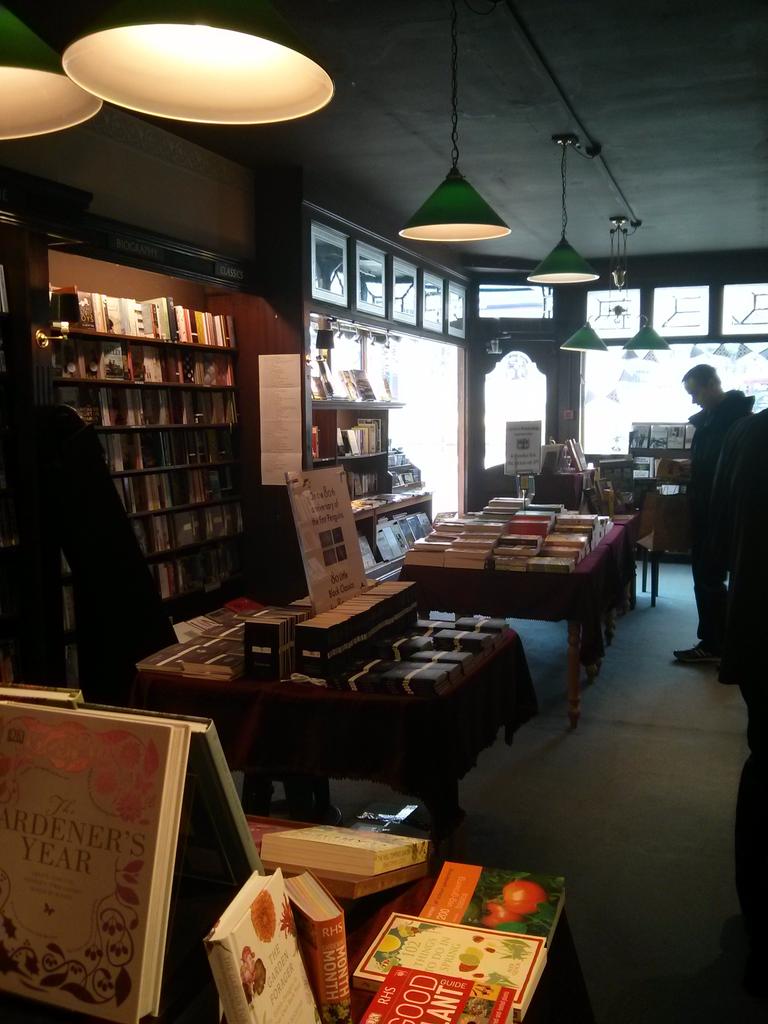 We spent lots of time browsing at the bookshop, appreciating their excellent displays, fantastic selection, chatting with the staff, and admiring the bunting in the window. We were also delightfully full after afternoon tea at Betty’s, which was a terrific treat. I am definitely enjoying combining my scone and book-buying experience on this trip. And then we walked around Ilkley, which was so green and gorgeous, cherry blossoms in bloom. We bought a pheasant pasty from Britain’s Best Butcher, and had another cup of tea at The Toast House across the street, which I loved because they had a copy of one of the most delightful Canadian picture books ever in their kids’ reading nook, and also because they used bundt pans as decoration. We decided that next time we come, we’re definitely going to go up on Ilkley Moor, and if the children don’t whine (much), we’ll reward them with afternoon tea for afters.
The last time we drove to Ilkley, the car in front of us exploded on the motorway off-ramp, but nothing so eventful happened this time. We drove home down winding roads, and were so pleased to come home to happy daughters and a not entirely exhausted Nana who was triumphant in having put Iris down for her nap (all of whom were made all the more happy by the fact that we bought treats back from Betty’s). And now I am going to have a bath in the most luxurious tub in the Northwest and read some Barbara Comyns whose Our Spoons Came From Woolworths I loved so very much.
Tomorrow we have no plans to visit a bookshop, but we are going to a cheese shop, which should be just as good.

**Speaking of Independent Bookshops, I’m happy to be taking part in Authors for Indies Day on May 2 at Book City on the Danforth. Between 2-4, I’ll be guest bookselling, talking up my favourite titles. I hope you will come and visit! And if it sounds good but not local, I am sure you can find a similar event going on in your neighbourhood. It’s going to be great.
January 3, 2015
Christmas Vacation
 One of many reasons that members of our family are unlikely to ever take the world by storm is that our greatest talents really are for leisure—we’re experts at doing nothing, or just enough of something with requisite amounts of sofa-lying for good measure. We often visit cultural institutions such as museums and art galleries but rarely for more than an hour or two at a time, and never without a trip to the cafe AND the gift shop. Going out for lunch is our main occupation, and we always have dessert. We are really very good at enjoying ourselves, and so the last two weeks have been an absolute pleasure.
Two things: first, that I finished things up so that there was no work at all to be done for a week or so, and second, we turned off the internet. For a week, there was no checking of email or twitter, which opened up vast pockets of time in every day for all kinds of things—reading, playing, baking, carol-singing, and doing the Globe & Mail holiday crossword. On Tuesday we bought the newspaper because we were curious about what had gone on in the world, and it was odd to flip through the pages and discover news items we hadn’t heard about elsewhere.
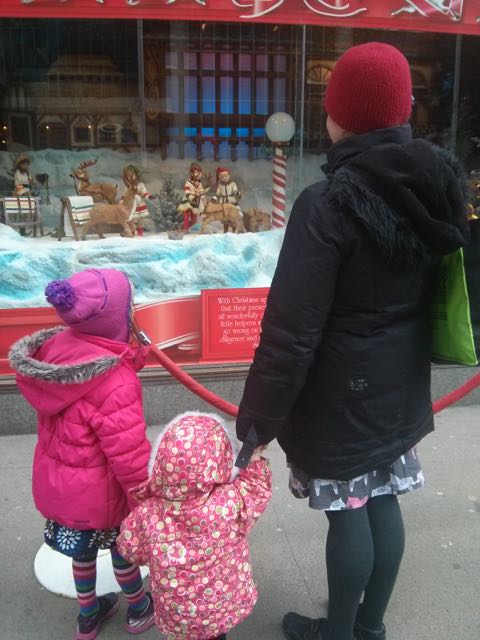 We spent the first couple of days of our holiday trying in vain to kick the cold that’s been embedded in our heads since the beginning of December. On the Sunday, we went down to the Bay on Queen Street to look at the Christmas windows, which were wonderful, and then went into the store and realized that department stores were the perfect way to reconcile our hatred of shopping malls with the joys of Christmas consumption (glittery lights, perfume smells, shopping bags with string handles, and 1 kilo tins of chocolate. Also, I now own tights without holes in the feet). Speeding home on the subway in time for Iris’s nap and for me to meet friends for an exquisite afternoon tea at Dessert Trends Bistro.
 On Monday, we went to the library (because holidaying doesn’t always have to happen on a lavish scale) and then had smoked meat lunch at Caplansky’s Deli. I also went out for dinner with my friends and drank far too much wine. On Tuesday, I don’t think we did anything, partly due to the wine. Throughout all of this, Stuart and I were watching movies and episodes of Midsomer Murders in the evening (because we are 85 years old) and Harriet watched How to Train Your Dragon Two during Iris’s nap times. On Christmas Eve, we went to the Art Gallery to see the Art Spiegelman exhibit and had a lovely brunch at the Frank Restaurant, which we save for the specialist of occasions. On the way home, we picked up our turkey, which we fastened into our stroller. That evening, we had chicken fajitas for Christmas Eve dinner for the 10th year in a row, and left a snack for Santa.
 Christmas was so good. Not only did we not have to leave the house, but we got to have my mom come and visit! The children got excellent presents and had fun playing with them throughout the holidays. I received great books, nice clothes, and other lovely things, including a La Cruset butter dish I’d been hankering after and new Pyrex. We all also received new CDs (because are 85 years old and like to do 20th century things) and so the holiday has been extra-filled with music—some of which was even made after 1987, which is very rare for us. My mom arrived and played with the children (which was not very difficult—she arrived bearing her present of a trunk full of dress-up clothes) while Stuart and I set about cooking the best Christmas dinner ever. The joys of Skype brought us the company of Nana and Granddad in England, and our adorable Alberta relations.
 On Boxing Day, we went to the ROM, and partook in a yummy dinner of leftovers—Stuart makes the best turkey sandwiches on earth. Iris also slept until 7am for the first time in her whole life, which was mind-blowing, but also a bit terrible because when her sleep for the subsequent week was abysmal, I wanted to pitch her out the window. The next day, my dad and his partner arrived, and we all had an excellent time with them. And they played with the children while Stuart and I cooked up another very good meal—the greatest turkey pot pie of all time whose secret recipe was duck fat. The day after that, we drove out to my aunt’s in the West end, stopping en-route to buy ice-skates for Harriet and I, which had the potential to be a boondoggle. And then we had a very fun dinner with the best kinds of relations on earth—cousins.
 Monday was the best day—Harriet and I headed downtown to meet our friend Erin and watch the new Annie film, which we’d been looking to after avidly viewing its trailers for the past month AND after watching the old Annie every day last summer. The reviews for the new Annie were terrible and all wrong—the movie was wonderful. (That one of the critics referred to the 1982 movie as “an abomination” perhaps suggests that some people had no business reviewing either movie, both of which were masterpieces, in my humble opinion.) We all had such a good time watching it, exuberantly applauding as the credits rolled. And then we met Stuart and Iris and took the subway to Erin’s new house in Bloor West Village, which is very conveniently located near the new Book City (which was bustling and full of wonderful books.)
On Tuesday, I had to take a certain someone to a dermatologists to have a wart examined, which wasn’t so memorable, except that we got to stop at HMV on the way and buy the Annie soundtrack, a move supported by all members of our household. Iris can now sing “Tomorrow”, which is really something to behold. We also love Sia’s version of “You’re Never Fully Dressed Without a Smile” and the bizarre and catchy “Moonquake Lake”, with its memorable hook—”she’s a fish and he’s a boy.” That night our friends Jennie, Deep and Lilia came for dinner and the best time was had. They were kind enough not to complain about our music selection.
 Rumours of boondoggles were averted on New Years Eve when Harriet and I went skating at Christie Pits—Harriet had the best time and loved it, which was good but also troubling as it means that I have to keep going skating. We went again yesterday and both of us were vastly improved. A third jaunt is scheduled for tomorrow. New Years Eve was our traditional chocolate fondue and ringing in the UK New Year before the children went to bed. And then Stuart and I proceeded to play board games (and ping pong, until Harriet came out of her room and asked us to stop because the pinging and ponging was too noisy) until we were done, and then we went to bed and brought in the new year lit by bed-side lamps, turning away from our respective novels for a moment as the clock ticked over to 2015. Which is the best way to ring in the new that I could ever have imagined.
 New Years Day was boring—what a wondrous indulgence is that in this day and age? Although we did have our first meal of the year at Fanny Chadwick’s for brunch, which was delicious, and Iris has been transformed into someone who is fairly respectable about restaurant behaviour from all her practice this holiday. And Harriet and I got to play Scrabble for Juniors, which is almost as excellent as spending New Year’s reading in bed. Yesterday we went to the ROM to see the Wildlife Photography exhibit. And yes, more skating. Today we’re doing nothing, which might prove to be a bad idea but feels pretty good from where I sit (on the couch, wearing jogging pants, watching snow falling outside). We’ve kept things a little special with scones with jam and Devonshire cream, because I had a jar of the latter in the fridge and we had to use it up—not the worst task to be charged with.
 And I’m writing it all down now mostly so that I can remember it, the holiday we were so desperate for and which so delivered. I’m writing it all down because all these ordinary things (libraries and lunches) are so easy to forget, and I don’t want to. I don’t want to forget either that we’re so blessed with friends and family and each other. If how you spend your days are indeed how you spend your life, then these past two weeks are an indication that we’re doing something right. And it’s something to hold on to as the lights of December fade—let the next few months be something more than just a countdown to spring.
August 26, 2013
Sweet Summer
 I’ve been drinking tea with sugar cubes since the end of July. This came about while we were at the cottage and I was drinking my tea out of a pyrex mug, and it just seemed wrong to take tea in pyrex without sugar, so I bought a box of sugar cubes at the Foodland in Coboconk because regular sugar came in 2kg bags which was much too much for the cottage. Sugar cubes, however, proved impossible to quit, and even once I was home with my regular mug, two cubes had become necessary to keep my cuppa tea proper. Sugar cubes, it seems, are irresistible, part building-block, part sweetener. But they are made to be rare, I think. I don’t want to be the kind of person with sugar cubes always in my cupboard after all, which is the very definition of decadence. And so I’m drinking my final cup of sweetened tea as I write this now, the last two cubes from the sugar cube box dissolved within. (A spoonful of sugar would be sweet enough, but hardly offers the same appeal.) It’s going to be a difficult transition back to the unsweetened life, but I am determined to be brave enough to weather it.
And speaking of tea, I underlined this passage from Graham Greene’s Travels With My Aunt: “I went restlessly out and crossed the little garden where an American couple… were having tea. One of them was raising a little bag, like a drowned animal, from his cup at the end of a cord. At that distressing sight I felt very far away from England…”
May 12, 2013
Every Day is Mother’s Day…
 …when one is self-absorbed and self-indulgent (hello! Over here! Waving!!). And every day is doubly Mother’s Day when one is 38.5 weeks pregnant, but today in particular. My own excellent mom was kind enough to let me lounge around at home and be the centre of the show with my little family (though we’re looking forward to seeing her next weekend). I was given tea and croissants in bed this morning, and a gift from said little family–the book Where’d You Go, Bernadette, which my clever husband had noticed me to eyeing in the bookstore last weekend. I think it will make an excellent post-baby read. And then I was left alone to reread the wonderful poetry collection Arguments With the Lake, which I’ll be reviewing later tonight. But that wasn’t all! Today, I was informed, we’d be having Afternoon Tea at Dessert Trends. And it was delightful, delicious and fun.
 Harriet was a bit challenged by the constraints of afternoon tea today, but she managed to hold it together, and we understood why she was not quite at her best. Yesterday had been her 4th birthday party (celebrated 2 weeks early due to baby’s imminent arrival) and perhaps an ice cream party and afternoon tea are too much for one weekend when you are just 206 weeks old. It is also possible that the fancy green tea eclairs weren’t entirely suited to her palate, though she found the scones and jam quite acceptable, mango tart as well. We were very happy to eat whatever she couldn’t manage.
 Her birthday party yesterday was a splendid success! It was held at The Big Chill Ice Cream Parlour, and attended by 12 of her marvelous friends who were surprisingly very enthusiastic about the game I’d entitled “Disappointing Pass the Parcel” in which the parcel was filled with citrus fruit. They were also very good at “Pin the Scoop on the Sundae”, and nobody mentioned that I am the world’s worst party-game planner. We had hot dogs, ice cream AND cupcakes, so all the food groups were met. Harriet was a spectacular birthday girl who made me very proud, and she had fun, which was the most important thing of all.
 Her friends and their families kindly contributed birthday gifts via Echoage, which puts half the gift toward a charitable donation (Harriet picked The Stop, and is quite excited that they’re getting a gift for her birthday) and the other half toward the purchase of her first bicycle. We went to buy the bike today, and were thrilled to get the Norco Rainbow bike. The weather today was disgusting, so she wasn’t able to ride it properly, but still mastered the art of pedaling via riding around up and down the hallway, which was very exciting. Can’t wait for the sun to come out again so we can hit the sidewalk!
November 2, 2012
Where my tea rests
 I don’t have a desk. In another life, I worked in a closet, but now the closet is stuffed with baby paraphernalia and there is no room for me and mine. Which isn’t bad, in fact it’s fine. For the past three years, I’ve made the western half of our couch my working home, which you’d be able to tell if you ever sat on it. The springs are shot. My seat is right beside the tall bookcase which houses authors A through H, with a table nearby to pile books and set my laptop on. Often, my husband is situated nearby too, which makes for an optimum working environment. I like it also because I get to work whilst lying down.
What I appreciate most truly, however, is the place where I rest my tea. From my Random House mug, of course, because what’s a point of a teacup if it isn’t enormous? But not so enormous that it can’t perch exactly within arm’s reach, right beside Anne Enright and Alice Thomas Ellis. I think my tea keeps really good company– the gorgeous spines of my Anne Fadiman books, and even Deborah Eisenberg. It’s always right there when I need it. But not so near within my reach that my flailing arms have ever knocked it over. Yet. Knock on (bookcase) wood.
August 16, 2012
Mary Poppins and Afternoon Tea
 “So, still admiring themselves and each other, they moved on together through the little wood, till presently they came upon a little open space filled with sunlight. And there on a green table was Afternoon-Tea!
A pile of raspberry-jam-cakes as high as Mary Poppins’s waist stood in the centre, and beside it tea was boiling in a big brass urn. Best of all, there were two plates of whelks and two pins to pick them out with.
“Strike me pink!” said Mary Poppins. That was what she always said when she was pleased.
“Golly!” said the Match-Man. And that was his particular phrase.
“Won’t you sit down, Moddom?” enquired a voice, and they turned to find a tall man in a black coat coming out of the wood with a table-napkin over his arm.
Mary Poppins, thoroughly surprised, sat down with a plop upon one of the little green chairs that stood round the table. The Match-Man, staring, collapsed on to another.
“I’m the Waiter, you know!” explained the man in the black coat.
“Oh! But I didn’t see you in the picture,” said Mary Poppins.
“Ah, I was behind the tree,” explained the Waiter.
“Won’t you sit down?” said Mary Poppins, politely.
“Waiters never sit down, Moddom,” said the man, but he seemed pleased at being asked.
“Your whelks, Mister!” he said, pushing a plate of them over to the Match-Man. “And your Pin!” He dusted the pin on his napkin and handed it to the Match-Man.
They began upon the afternoon-tea, and the Waiter stood beside them to see they had everything they needed.
“We’re having them after all,” said Mary Poppins in a loud whisper, as she began on the heap of raspberry-jam-cakes.
“Golly!” agreed the Match-Man, helping himself to two of the largest.
“Tea?” said the Waiter, filling a large cup for each of them from the urn.
They drank it and had two cups more each, and then, for luck, they finished the pile of raspberry-jam-cakes. After that they got up and brushed the crumbs off.
“There is Nothing to Pay,” said the Waiter, before they had time to ask for the bill. “It is a Pleasure. You will find the Merry-go-Round just over there!” And he waved his hand to a little gap in the trees, where Mary Poppins and the Match-Man could see several wooden horses whirling round on a stand.
“That’s funny,” said she. “I don’t remember seeing that in the picture, either.”
“Ah,” said the Match-Man, who hadn’t remembered it himself, “it was in the Background, you see!”
The Merry-go-Round was just slowing down as they approached it. They leapt upon it, Mary Poppins on a black horse and the Match-Man on a grey. And when the music started again and they began to move, they rode all the way to Yarmouth and back, because that was the place they both wanted most to see.
When they returned it was nearly dark and the Waiter was watching for them.
“I’m very sorry, Moddom and Mister,” he said politely, “but we close at Seven. Rules, you know. May I show you the Way Out?”
They nodded as he flourished his table-napkin and walked on in front of them through the wood.
“It’s a wonderful picture you’ve drawn this time, Bert,” said Mary Poppins, putting her hand through the Match-Man’s arm and drawing her cloak about her.
“Well, I did my best, Mary,” said the Match-Man modestly. But you could see he was really very pleased with himself indeed.
Just then the Waiter stopped in front of them, beside a large white doorway that looked as though it were made of thick chalk lines.
“Here you are!” he said. “This is the Way Out.”
“Good-bye, and thank you,” said Mary Poppins, shaking his hand.
“Moddom, good-bye!” said the Waiter, bowing so low that his head knocked against his knees.
He nodded to the Match-Man, who cocked his head on one side and closed one eye at the Waiter, which was his way of bidding him farewell. Then Mary Poppins stepped through the white doorway and the Match-Man followed her.”
-From P.L. Travers’ Mary Poppins, which our whole family has been so enjoying for the past week or so.
July 25, 2012
Afternoon Tea: A Timeless Tradition by Muriel Moffat
 No surprise, really, that I’d find this little book appealing, Afternoon Tea: A Timeless Tradition by Muriel Moffat. I am the kind of person who has a tea books shelf in her kitchen (just above the tea things shelf, if you’re wondering). Moffat’s book is an ode to afternoon tea in general, and to tea at Victoria’s Fairmont Empress Hotel in the specific. She writes of her own connections to teatime, of the importance of English grandmothers in passing along such traditions. Her prose is light and punctuated mainly by exclamation marks. She addresses the history of tea and tea ceremonies, a guide to tea-taking (from how to warm the pot to what to wear), and then a chapter on tea at the Empress Hotel, the experience and its history. The rest of the book comprises recipes for scones, cookies, tiny sandwiches and other things (and now I see, I have to get myself a crumpet ring).
As tea books go, Afternoon Tea is hardly groundbreaking, but it’s a pretty little object and a perfect keepsake. Originally self-published with 30,000 copies sold at the Empress Hotel gift shop in five years, it’s now been gorgeously re-packaged by Douglas&McIntyre, and is about to find a wider readership among afternoon tea devotees.
April 22, 2012
The Famous 5
 So many things I love are a part of this photo. Also, we had a really wonderful trip to Ottawa this weekend. Lots of reading on the train, hotel fun, good food, friends, and, speaking of friends, we were the beneficiaries of some amazing hospitality. Long live the Mini-Break!