April 18, 2016
How books talk to each other
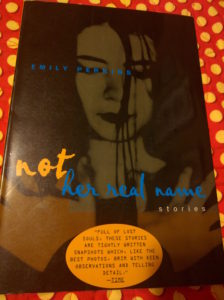 Tonight I was inspired by Sarah’s #ShortStoryaDay post to pick up “Not Her Real Name,” by Emily Perkins, from her short story collection of the same title. I’d first read the collection when I interviewed Emily Perkins in 2008, when Novel About My Wife came out. In her post, Sarah notes that she was surprised to reread this story and discover that two characters share a name with her daughter, and surmises that it was was with this story that she first fell for the name. She quotes a couple of lines from the story: “—Imagine a couple both called Thea, says Thea. —Isn’t it awful? One of the hazards of same-sex relationships I suppose.”
Now right now I’m reading a book called The Name Therapist, by Duana Taha, which is so much fun and absolutely fascinating and I can’t wait to tell you all about it. And perhaps I should have seen it coming, going from such a non-fiction book about names and how they define their bearers to a story called “Not Her Real Name” that I might encounter uncanny connections. And while I didn’t encounter either of my own daughters in this story, what I did find was really kind of strange.
I read the beginning of the story, the part about the two Theas, and then went back to The Name Therapist, in which Taha writes about the possibilities of same-name couples in same-sex relationships and how this idea fascinates her as a name enthusiast. And then there was a bit about a guy named Marc who orders coffee at Starbucks and gives his name as “Marc with a C,” which comes back on his cup labelled, “Carc”. Going back to “Not Her Real Name” then to find another Marc drinking coffee:
“Marc with a c. Cody’s seen it written down by the telephone… Marc. Marc. There’s something disturbing about the name. Like Jon without an h. Or Shayne with a y. Marc. Spelt backwards, it makes cram. A real word. This makes it seem like code. Code for what? Cram, cram. Trying to break the Code. OK, so her own name is enough of a liability. She shouldn’t laugh at other people’s. But Marc—its like biting tinfoil.”
Cody’s own name is referred to in connection the Jack Kerouac novel, Visions of Cody, which she’s never read, she says, and I haven’t read it either. I’m still a bit confused by the story’s title and what it means exactly, trying to break that code. And maybe this is the point. Earlier in the story, Cody’s thinking about a guy called Francis. “You always thought, Francis, rhymes with answers. Which it doesn’t, really. But you’d change the s of answers to be soft like his name.”
And isn’t all that so weird? I am really not so singular but I suspect that I am the only person in the world who is reading The Name Therapist and “Not Her Real Name” concurrently, two works that speak to each other so clearly, asking questions with answers echoing back. A book that came out the other day with a short story collection that was published twenty years ago by an author on the other side of the world—and they are connected in ways their authors never even fathomed. And this is why I love books and literature so much, that it’s all a code, quite beyond us and quite unbreakable. And the infinite possibilities of these connections too, how books upon books can talk to each other, the libraries of the world abuzz with these private conversations.
February 13, 2016
Happy Valentines Day
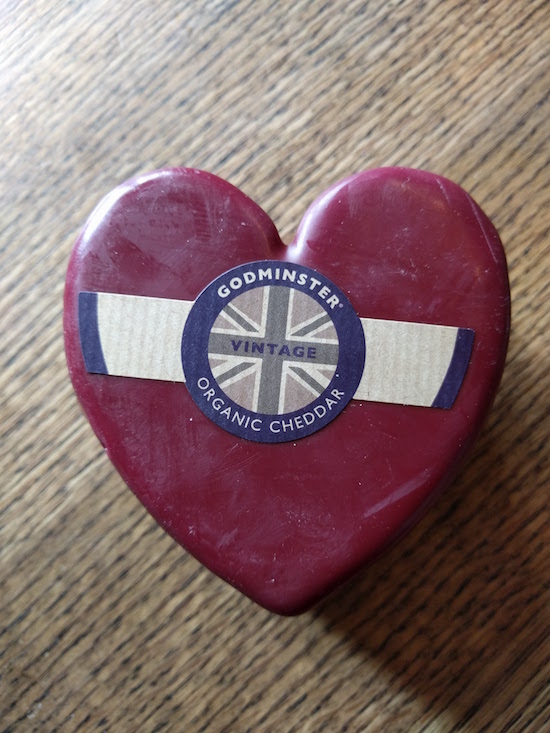
Everything’s been a special occasion around here lately, what with Pancake Tuesday and the fact that we had afternoon tea for dinner the day after that. And now it’s a long weekend, four days of it if you count Harriet’s PA Day, and we’re stretching out our Valentines Day celebrating and marking it with cheese. (Long weekend adventures have been extensively instagrammed.) It’s freezing cold outside but everything around here is wonderful and cozy, which feels nice after our terrible boring Christmas vacation rife with sickness. I just finished reading my second novel by Tana French (you MUST read Tana French) and now for sentimental reasons, am about to embark upon a reread of The Republic of Love.
January 26, 2016
Funny Faces
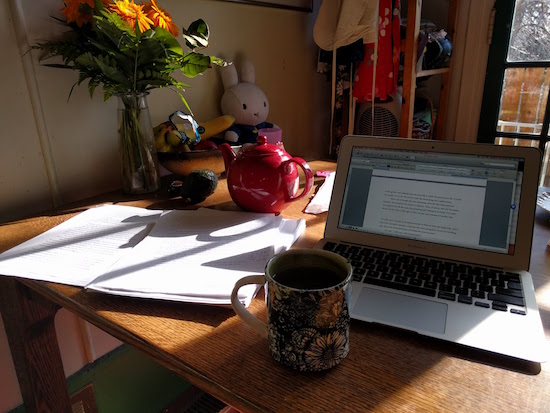
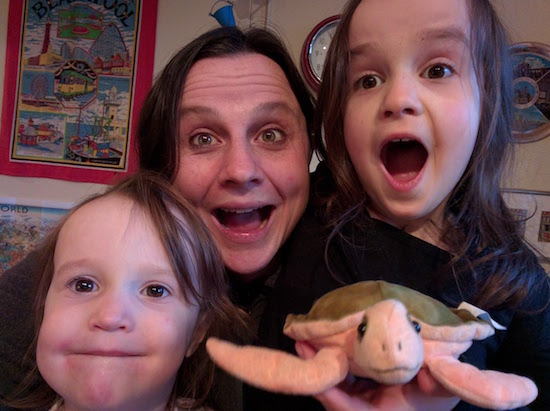
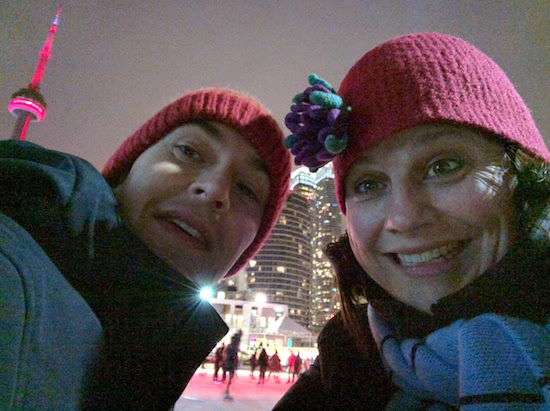
Do you know that I’ve nearly filled up an entire notebook with jottings and quotes from my Mad Men rewatch, and we’re only just beginning Season Three? To what purpose, I don’t know. It’s my new fitness regimen (the Mad Men, not the notebooks) as I ride my exercise bike while we’re watching, and I check the time less and it goes by much faster than when I’m merely reading. (Don’t tell reading I said that; it’s all exercise’s fault anyway.) I might give up on fitness altogether at the end of Season 7. Anyway, it’s a scramble to get the children into bed so we can begin watching and me riding by 9 or so, which means when it’s over, it’s that time of day I’ve spent all day waiting for: time to curl up with Tana French. I am reading her novel, In the Woods, for the first time, and I am in reading heaven. Ostensibly crime fiction but so much more substantial than that, rich and enthralling. I am so busy right now, which was a terrible time to pick the book up, because all I want to read is read it all day and forever. I am looking forward to discovering her other four novels, each of which features a more minor characters from the previous. one Anyway, I’m now in the midst of my second week to finish up my edits on Mitzi Bytes, and things are going well. Getting back to it in a matter of minutes, but in the meantime, wanted to share with you some funny faces from previous days: Harriet and Iris and I making funny faces in the kitchen; evidence that Stuart and I indeed went skating at Harbourfront on Friday night and it was wonderful; and a perfect photo from yesterday when Iris broke into the stampers and rubbed one all over her face, inadvertently channelling David Bowie.

December 9, 2015
Reading Report from the Bedridden
 So there I was, reading The Diplomat: Lester Pearson and the Suez Crisis. A book I picked off my shelf after the Paris terror attacks last month, and as Canada stands on the cusp of returning to the international stage in terms of diplomacy. There aren’t any women in it, so it wasn’t completely my cup of tea, but it was relevant and really interesting. Further (and don’t tell anyone I said this, but) Lester “Mike” Pearson was sort of a bit womanly himself, in that he was a pragmatist with a sense of the universal, he was good at working with others, negotiating egos and orchestrating practical outcomes. He saw the value of a middle ground, nuance; his world wasn’t black and white. And I was learning so much about how decisions 90 years ago and ever since have set up the Middle East to be the bloody mess it is today. How much history matters to right now, but so few lawmakers seem to have that kind of vision (and also keep making the same mistakes over and over. Iraq in 2003, anyone?)
But then I got so so sick. The night my sickness arrived, I had a terrible fever and was staring at a photo of Anthony Eden in Ottawa in Feburary 1956 and he wasn’t wearing a scarf, and I was shivering inside my own terrible chill, and thinking, “Poor Anthony Eden. He was must have been so cold.” When I went to sleep, the fever continued, and I had weird, terrible Suez Crisis dreams all night.
The Diplomat is a very good book, but it’s a terrible book to be reading while one is ill. Though perhaps during that first week of illness, there is existed no book that would have suited. I kept falling asleep and staring at the ceiling, and Lester was kind of like my albatross—it was far too important a book to give up on (and perhaps I would never return to it) but I wanted light and Lester wasn’t it. Eventually though, as the fever abated and I persisted, I got to to the end. 340 pages of men doing men things, as my virus morphed into pneumonia, and I’m glad I didn’t give up. But it was also a relief when I was finished.
 The other terrible thing about being sick, speaking in terms of literary blogging, is that I never got a chance to talk about Penelope Fitzgerald’s The Blue Flower, which I was reading before The Diplomat. Penelope Fitzgerald, who I always struggle with anyway. Offshore is the book of hers I’ve most appreciated, and my desire to be more appreciative in general was underlined by the Hermione Lee bio. So I finally picked up The Blue Flower, which had historical fiction working against it. “You think that that you won’t like it, but you will,” is what everybody told me, and they were right. A fictionalization of the life of the eighteenth century German writer, Novalis, whom I’ve never ever heard of. So weird, but also perfectly realized. How did she do that? And, even more curiously, why? But yes, it turned out to be the most easily, immediately appreciable Penelope Fitzgerald ever. So glad I am persisting with her work. It helps, of course, that her books are short. I think a writer can make anything work if her books are short.
After The Diplomat, when I was still unwell, I spent a weekend rereading The Westing Game, by Ellen Raskin, and The Long Secret, by Louise Fitzhugh, which was perfect. Then Next to Nature, Art, by Penelope Lively, which was a bit lacklustre but also comforting and funny. And from there to The Story of a New Name, because there is no time like the pneumonic to finally get down to Elena Ferrante. And when that near-500 page epic was finished (but not an albatross), I read The Strange Library, by Haruki Murakami, whose UK edition is exquisite. So weird, but also short, and a beautiful book.
And now since I’ve been reading Astonishing Splashes of Colour, by Clare Morrall, which I found in a box on the street sometime last summer, I think, and I like it so much. 12 years late to the party, I know—it was nominated for the Booker Prize in 2003, a long-shot contender. But it’s a really weird, absorbing, surprising and beautiful book, if it is painfully sad as well. But it’s just so nice to be sick and stuck in bed, and loving a book at once. You never can tell the perfect book for the perfect time, can you?
Seasonally, I’m dipping in and out of Derek McCormack’s beautiful book, Christmas Days. It’s nice to have the time to do such a thing. And also enjoying my daily selection from the 2015 Short Story Advent Calendar—today’s author is Rosemary Nixon, who I love so much. When I’m very excited about one of these stories, I save them all day long for the sweet joy of anticipating. And next up is Girl in the Dark, by Anna Lyndsey, which my friend Janine gave me last summer when I developed my bizarre sun allergy. (She sent it with hope that it would not be my future, but perhaps something I would appreciate.) It just seems like the right thing, someone else’s trouble to outweigh my own, plus it seems readable and easy. And yes, short. Means a lot these days. Will report back as things transpire.
Anyway, the other bad thing about poor Lester is that he’s become my teapot coaster, and I keep pouring tea all over his steely-resolved head.
October 20, 2015
There’s all this goodness and decency and common sense on the ground
 “At present, here in what is still sometimes called our Calvinist civilization, the controversies of liberalism and conservatism come down, as always, to economics. How exclusive is our claim to what we earn, own, inherit?Are the poor among us injured by the difficulties of their lives, or are the better among them braced and stimulated by the pinch of want? Is Edwards undermining morality when he says “it is better to give to several that are not objects of charity, than to send away empty one that is”? Would we be better friends of traditional values, therefore better Christians, if we exploited the coercive potential of need on the one hand and help on the other?…” —Marilynne Robinson, “Open the Hand Wide: Moses and the Origins of American Liberalism.”
It’s been fascinating to be reading Marilynne Robinson’s essay collection, When I Was A Child I Read Books, during the last few days. I bought this book at the Victoria College Book Sale at the urging of my friend Kate, though I was wary of it—the religion, the erudition. But then I read President Obama’s interview with Robinson and realized I needed to explore Robinson’s ideas further, particularly as my own country has been standing at a major crossroads. Obama and Robinson’s discussion about “the sinister other,” about democracy, about faith and religion—it all seemed so relevant. I wanted a deeper understanding of where we might be going, and yes, I also wanted that feeling that you get, that whatever else is wrong with the world, at least Marilynne Robinson is in it.
Thankfully, Canadians made a choice against hatred and divisiveness yesterday, and I am so relived that glad that this awful era has ended. Though I know it’s not quite as simple as that—it is indeed a terrifically good time to be non-partisan, but I know many of my friends were pretty devastated to see the NDP garner such enormous losses. There terribleness of the last ten years has only underlined that we have centuries of colonial tragedy to reconcile with. I know that the new Liberal government will have to be held to account on their election promises. And it’s interesting to read the “Open the Hand Wide…” essay from Robinson, on the etymological and political origins of “liberal.”
 Interesting too to think of Leslie Vryenhoek’s novel, The Ledger of the Open Hand, which I really enjoyed just a few weeks and whose review I began with Marsha Lederman’s line, “Great civilizations aren’t remembered for their tax policies.” This has also been a book that resonates, and is concerned with the same theological issues that Robinson raises in her essay. It’s all very circular.
And of course it is. Lines from When I Was a Child… have been sticking with me, no matter that the book is indeed a demanding read, requiring patience and concentration. But oh, the rewards. “Imagination and Community” concludes with “The great truth that is too often forgotten is that it is in the nature of people to do good to one another.” I firmly believe this. Monday’s result is a testament to that—a rejection of a vision of the world entrenched in othering, hatred and greed.
So yes, it’s all very circular. Tonight I was reading the latest post at Calm Things, the blog by Shawna Lemay (whose novel arrived in the mail today!). The post is entitled “three small kindnesses.” It seemed in keeping with everything I’ve been thinking about. Lemay writes, “So I’ve been thinking this week about goodness, kindness, compassion, decency.” And naturally, she comes back to the Obama interview with Marilynne Robinson. Obama saying: “And the thing I’ve been struggling with throughout my political career is how do you close the gap. There’s all this goodness and decency and common sense on the ground, and somehow it gets translated into rigid, dogmatic, often mean-spirited politics.”
Sometimes—it’s heartening to see—goodness and decency prevail.
October 7, 2015
No wonder the children grew peaky
 “So he didn’t have your advantages,” went on Homily breathlessly, “and just because the Harpsichords lived in the drawing room—they moved in there, in 1837, to a hole in the wainscot just behind where the harpsichord used to stand, if ever there was one, which I doubt—and were really a family called Linen-Press or some such name and changed it to Harpsichord—”
“What did they live on,” asked Arietty, “in the drawing room?”
“Afternoon tea,” said Homily, “nothing but afternoon tea. No wonder the children grew up peaky. Of course in the old days it was better—muffins and crumpets and such, and good rich cakes and jams and jellies, And there was an old Harpsichord who could remember sillabub of an evening. But they had to do their borrowings in such a rush, poor things. On wet days, when the human beings sat all afternoon in the drawing room, the tea would be brought in and taken away again without a chance of the Harpsichords getting near it—and on fine days it might be taken out into the garden. Lupy has told me that, sometimes, there were days and days when they lived on crumbs and water out of the flower vases. So you can’t be too hard on them; their only comfort, poor things, was to show off a bit and wear evening dress and talk like ladies and gentlemen…” —Mary Norton, The Borrowers
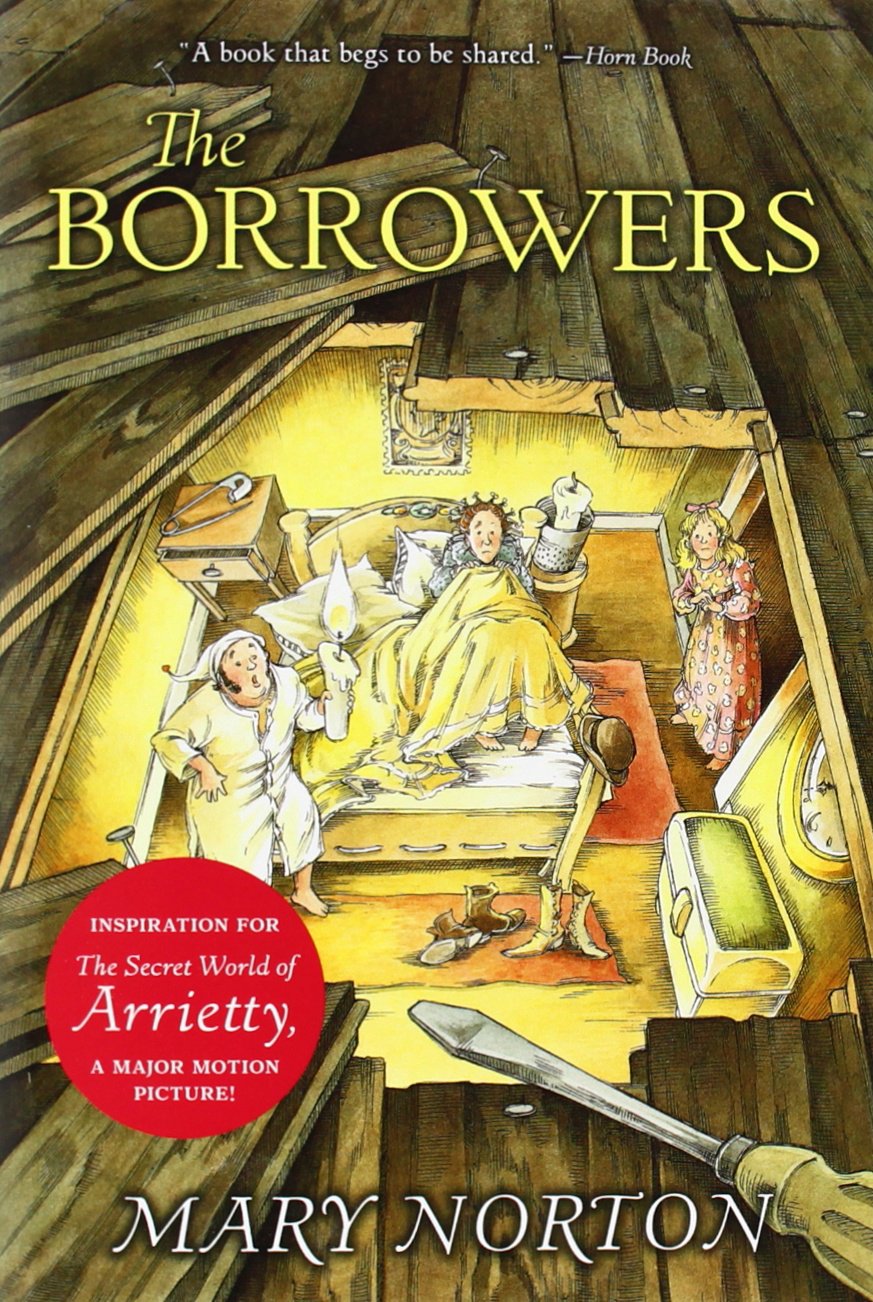
(We’re reading this right now and I’m loving it so much. I don’t know that I’ve ever read it before. When I was a child, I was into the American knockoff, The Littles, but I had no taste, and Mary Norton is so clever, funny and bright. I also like our copy because the cover is by Marla Frazee, who is one of my favourites. And sort of related, we recently finished reading The Lion the Witch and the Wardrobe, which went over very well, except that Iris now walks around saying apropos of nothing, “Aslan die?” and I don’t think she knows what die means, or even Aslan for that matter. But Harriet is quite enchanted and now we’re going to read the whole series, and tonight we were reading a new book called Written and Drawn by Henrietta, by TOON Books, and there was a Narnia reference, and I haven’t seen Harriet that excited since she found out she had a wobbly tooth.)
September 1, 2015
The Last Love Song
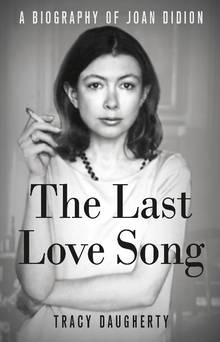 I’ve been reading The Last Love Song: A Biography of Joan Didion for nearly a week, a grand hulking book at 500+ pages. I spent Sunday afternoon in my hammock with it, and when I was finished, I’d never felt so languid. I do one day want to write an essay about Joan Didion, Mad Men, and longing. So I am inspired, even though The Last Love Song is not a particularly good biography—most of its source material is Didion’s autobiographical nonfiction, which I’ve read so many times that I know whole sentences by heart. So it’s not really illuminating. And Didion herself has made a career of being elusive, self-effacing. Also, if Didion’s brother-in-law Dominick Dunne had not been such a shameless name-dropper with a really big mouth, the author wouldn’t have much to go on. But it’s still interesting, because Didion herself is so compelling. The best parts of the book are when author Tracy Daugherty shows us how her writing works and why, dissecting her distinctive sentences. With Didion, it’s so easy to gloss over her polished surfaces and take everything at face-value that I hadn’t always read so closely. The worst parts of the book (not including the faux-Didion cadences and use of repetition and patterns) are when he tries to find autobiography in her writing itself, in which she’d always positioned herself so carefully. The mother-blaming for her daughter’s troubles is subtle but persistent, and troubling. There is nuance is Blue Nights that readers didn’t get, and I don’t think Daugherty gets it either. That Joan Didion couldn’t ever have been a mother except the mother she was. To suppose there is any other option is beside the point and not that interesting. But still, with its flaws, The Last Love Song is worthwhile and it’s good and heartening to see a female writer feted this way. Read Didion first though
August 23, 2015
Nature
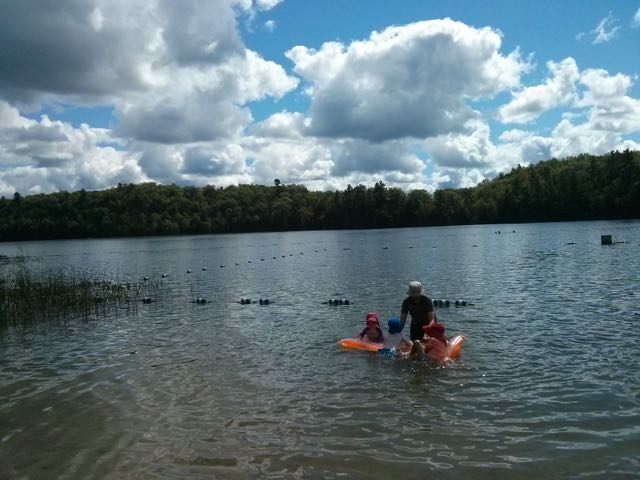
We went camping this weekend, and will need a few days to recover (and to do loads and loads of laundry). It was a beautiful, if exhausting weekend, and in addition to the company of my own family and that of my dear cousin’s people, I had the pleasure of Louise Penny’s and I’m now midway through her new one, The Nature of the Beast. It’s wonderful! (And must get this one read and then reread Joan Bodger’s How the Heather Looks before my book club meets on Wednesday.) Anyway, the Louise Penny was some consolation for the fact that I am now allergic to both lake water AND sunshine, and therefore had to spend our beach time hiding under an umbrella that kept blowing away. I was only 40% completely grumpy and annoyed about these circumstances, though some might estimate the percentage as a wee bit higher…

May 24, 2015
Trouble and Spaciousness
 Am I having trouble reading because I’m unsettled, or am I unsettled because every book I start to read is so darn dissatisfying? This is a question I’ve have to ask myself over and over in my life, and I’ve never once come close to circling round and round about it. All I know is that the last four books I’ve picked up I have abandoned after a few pages, and the book I spent most of last week reading had no impact on me whatsoever. So now book review today. And I had to pull out the big guns because to be reading nothing is to not be me. Last night I started reading The Encyclopedia of Trouble and Spaciousness by Rebecca Solnit, and I think it’s going to save me.
I think the trouble is the books though because otherwise all is very well here. Last week flew by, a very short week with so much in it. All fun. And after last week’s meltdown (mine) in regards to baby sleep, we shifted gears. I’ve stopped breastfeeding, we moved Iris back into her crib upstairs in our room, and left her to cry at night. The last strategy never worked with her big sister who would only grow more and more hysterical, but Iris settled pretty quickly and by the third night without a peep. She is still not sleeping all night, but everything is much much better and one night she slept until 5, and the idea that putting her to bed is no longer a production (and therefore someone who is not her parent can do it?) is tremendously exciting.
In other now-reading news, I’ve started getting the New York Times supplement with the Sunday Star, which comes with a standalone books section (an abridged version of the real one) and it’s so terrific to read. I miss real, solid book review sections. Anyway, this has added another highlight to my week.
Harriet turns six on Tuesday, and Iris threw up in a parking lot this afternoon, which has freaked me out a bit because we all spent Harriet’s birthday last year completely ill. I have since learned though that there is no rhyme nor reason to my children’s vomiting, so here’s hoping it was just a thing. Especially since Harriet is the greatest child alive and her choice of how to spend her birthday evening is having dinner at my favourite restaurant.
Regarding the photo. At Harriet’s school concert on Thursday, Stuart pointed out a woman wearing bunting shoes. Naturally, I had to talk to her. “Where did you get them?” I asked her, and she only looked a little bit sheepish but mostly proud to tell me she’d found them by the side of the road and cleaned them up so she could wear them. What sweet bunting fortune.
May 18, 2015
Night and Day
Night
We are going through a difficult period. I like framing it this way because it suggests an ending, as opposed to, We are going through a difficult eternity. “It’s just a phase,” we keep saying. “Things will get better,” but we’re beginning to sound less sure of this. It has been so long. Nearly two years since I’ve had unbroken night’s sleep. And since we came back from England, things have been awful. Iris moved downstairs into Harriet’s room to sleep, but her nighttime wake-ups have continued, plus it’s started taking her sometimes up to an hour to fall asleep, she requires us lying down beside her to do so, and then she gets up again at 11, at 1. She won’t settle unless she’s in bed with us, which would be okay (and I’m certainly not going to fight a screaming nearly-two-year-old in the middle of the night) except that then she flops and kicks and pinches my upper arms. It is unpleasant. And last night we had a babysitter booked so we could go out to a movie, but Iris refused to go to sleep. Or she would be asleep until we dared to rise and leave the room, and then her eyes would snap open and there we’d be again. Eventually, I gave the babysitter $20 and told her to go home, because we’d missed the movie. And it seems like the baby is holding us hostage, when I dare to frame the whole thing like a power struggle (which I shouldn’t do—it only makes unpleasant realities worse). We can’t go out together to anything that starts before 9pm, because no one else but Stuart and I has the patience to put Iris to bed, and now that she’s only staying asleep for 2hrs after that (if she goes to sleep at all), the world seems to have shrunk to the size of an acorn. I know that there are far worse problems to have than this one, but perspective can be hard to come by when one is having melodramatic thoughts about being subject to tyranny. Five years ago, I wrote a blog post about baby sleep books called The Trajectory of a Downward Spiral, but the trajectory of this plot is more like a head smashing into a wall. Repeatedly.
Day
 But. We have had the most wonderful weekend. A weekend whose wonderfulness is currently under threat as I spend this holiday Monday morose and bereft at the end of Mad Men. The children watched Annie and ate goldfish crackers in Harriet’s room while Stuart and I watched the final episode this morning. It was so absolutely perfect. Overwhelmingly good. I feel about this show like I’ve been immersed in the narrative for six years, swimming around inside it and examining from all angles. I can’t believe it’s over, but then it isn’t really. We rewatched an episode from Season 1 on Saturday night, and it occurred to me that I’ll never really be done with it. But still, I’m sad there is no more to look forward to. So many of my feelings were invested in these characters. It all mattered a lot to me.
 On Saturday, we celebrated summer things with a trip to the Wychwood Barns Farmers’ Market and ate delicious food, and delighted in the fact that our children are old enough to play unattended (in mud puddles, no less) while we sit on a park bench. We also delighted in that our children were so thrilled to take the bus to the market, but were also cool with walking home. So many of my plans for this summer are inspired by Dan Rubinstein’s book, Born to Walk, and I appreciate that Harriet is big enough to be venturing further afield on foot, to be discovering her pedestrian legs without (too much) complaining. But there are also wheels, and so after Iris’s nap, she went on a bike-ride. We’re going to shed the training wheels this summer, we’ve resolved, but this is just one more thing we’re not sure about how to teach her to do—along with shoelace tying. After that, we did our planting, mostly flowers because the squirrels thwart our efforts to grow anything more substantial. Some kale and basil, but otherwise impatiens, and suddenly our deck is beautiful again. The silver maple that shades our house and yard in magnificent bloom. There is a hammock set up underneath it.
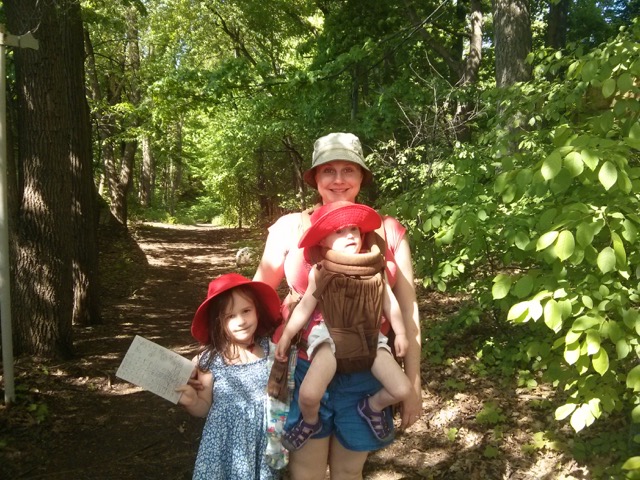 Yesterday, we went on our first ravine walk of what is to be many, as we’ve declared 2015 as #SummeroftheRavines. Once again, this is a plan born of Born to Walk—to explore these wild corners of our city. We didn’t have much of a plan and climbed down into the Rosedale Valley via the path behind Castle Frank Subway Station. Unfortunately, Bayview Avenue cuts off our access to the Don Valley, which we weren’t expecting, so we had to climb back out of the ravine in order to get to where we really wanted to be, and by this point, it was nearly time to quit.

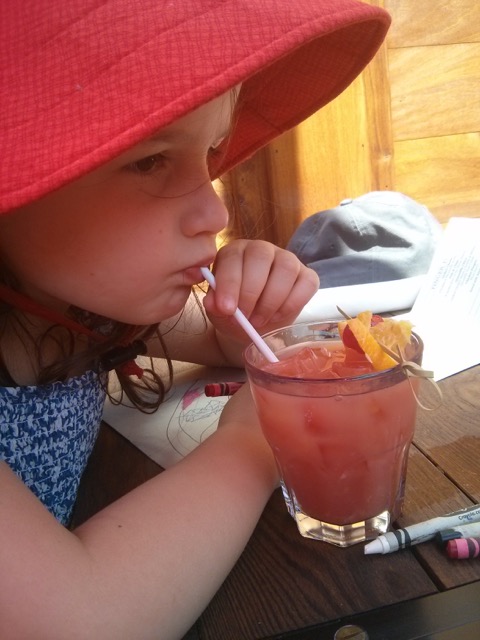 But we had fun and the weather was beautiful, and once again, there are very little complaining. We’d compiled a Ravine Walk Bingo sheet, which gave our walk some incentive, as did the promise of lunch afterwards. We went to the House on Parliament and had the most delicious meal, our first patio of the season. And then back to the hammock. I’ve been reading H is for Hawk all weekend, which is not a great read for the emotionally fragile, I am realizing. But it’s really good, deep and layered, and totally weird. So intense. It is possible my whole family will be relieved when I’m finally completed it.
 Which brings me to right now where I’ve just been delivered lunch. (“Um, if I’d known you were having lunch in bed, I might not have brought you breakfast there.”) And it’s up to me to save this day from my lugubriousness and histrionics. Iris has started being capable of having actual conversations (albeit stilted ones, usually about dogs), which is extraordinary, and clearly her brain is going wild these days. If I’m able to muster perspective, it would be that these development changes are responsible for our sleep woes. If I am able to focus less on the woe. In a few weeks she will be two. Harriet turns six next Tuesday. For our family, the next month and a bit is a season of happy birthdays and anniversaries and so so many reasons for cake. (Another? My sister is having a baby tomorrow.)
It all goes by so fast.