April 30, 2025
Teach Your Children Well
Hey, moms and dads! You sure aren’t telling your kids about the abortions that made your family lives possible, eh?
Because if you were, your kids would be wise enough not to cast their student votes for a party whose members are chomping at the bit to crack down on reproductive freedom.
We can do better than this, especially if we want to ensure our children grow up with the reproductive rights that we did.
February 9, 2025
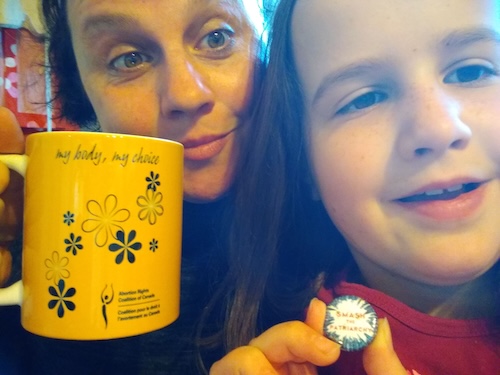
My Story on the ABORSH Podcast

Thank you, Rachel Cairns, for making my abortion story part of Season Two of the Aborsh Podcast. You can listen on Spotify or Apple Podcasts, or wherever you get your podcasts.
June 4, 2024
Part of the Fabric of Everything
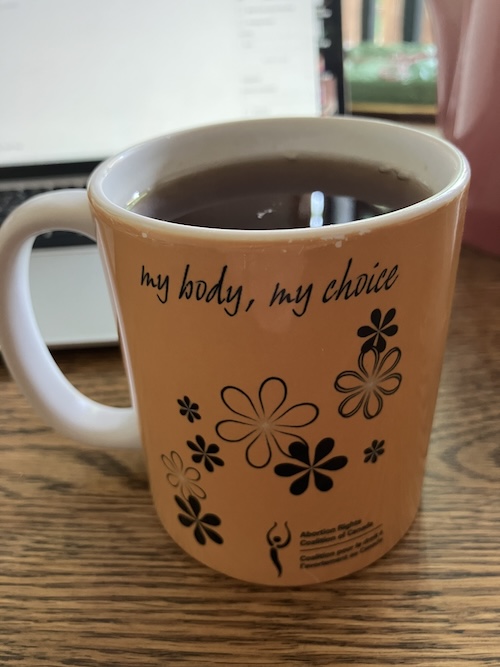
At this time of year, in the celebration of the ten day span between my children’s birthdays, and with my own birthday on the horizon (which reminds me of turning 23 when I was pregnant by accident but didn’t know it yet, and then also of turning 43 on the day that Roe vs. Wade was overturned, ending 50 years of federally-mandated abortion access for American women), obviously I am thinking about my own reproductive choices, especially the abortion 22 years ago that I was lucky/naive enough at the time to even take for granted, to suppose that decisions about my body—to choose when I did or did not want to be pregnant—were mine to make—as opposed to some evangelical MP from Saskatchewan, an activist judge in Florida, Dr. Seuss-quoting members of provincial parliament who went straight from their home-schools to the legislature, or any other random dude on Twitter.
I don’t talk about my abortion as much as I used to, which was perpetually, which was because it seemed like the matter was urgent, and it was, but also I got tired of saying the same things over again, robbing my words and stories of their meanings, and I also realized that Performing My Politics was not actually a sustainable way to live my life. And so over the past while I’ve been seeking quieter, more human and ordinary ways to embody all the values that are important to me, to not be making noise for the sake of noisemaking, because there is so much noise, and I don’t think it’s helping.
And what I mean when I say “I don’t talk about my abortion as much I used to,” is that I don’t talk about it here, on the internet, that I’m not longer yelling about it on social media, that I’ve stopped standing on a soapbox because the view wasn’t great, and real human connection was limited, but abortion still just as much a part of my ordinary life as it’s always been, part of the fabric of everything. The marriage that would never have happened had things not transpired as they did, the children who would never have been born, the perspective I would not have been afforded (once upon a time, I was a person who said things like, “I’m pro-choice, but it’s never a choice I would make for myself”), the stories I would never get to live and tell.
I’ve realized that my children understanding how abortion was integral to the story of our family is far more important than any social media post I’ll ever write. That conversations with friends over coffee are what matters too, discussions that give others the courage to put words to their own stories and dare to stay them out loud with their own friends and loved ones, and that we don’t always need to be blasting our politics on loudspeakers and screaming on placards, and that powerful things can happen in a chat in the cereal aisle. That small things can add up, and life is a long game, and so I need to find a way to keep going, to not wear my story out, to not wear myself out.
If you’re curious about my story, however—it you see your own story reflected in it, and/or if you aren’t ready to tell it widely and require an intermediate step OR if you simply don’t understand at all how a person can be grateful for such a thing as an abortion every single day (I really am!), and are compassionate and curious—we should talk, like humans do. (Please reach out if you are interested!)
March 9, 2024
Both sides brought large speaker systems and screamed
I didn’t observe International Women’s Day in a public platform sort of way. (I did re-watch Hidden Figures with my family, however. Would recommend.) This was not a conscious choice, but when I opened Instagram yesterday morning and the first post I saw was a woman screaming about all the people not included in her feminism, my brain said Nope. Nope. Instead of posting about feminism on the 8th of March, instead of yelling about my politics, I’m striving to embody those politics every day of my life, to live them. Which is more subtle than a soapbox. It occurred to me that it’s been a long time since I posted anything on social media about abortion, which makes me uncomfortable. Embodying politics instead of screaming about them is not the same as staying quiet and being polite, but sometimes it looks the same. Maybe even the effects are the same, which is counter to the way I want to live my life, but all of this introspection has come about because I’m not convinced that yelling gets great results either. Also, as no doubt many are thinking, there are just three people left on the planet who don’t know my stance on abortion anyway. I have nothing new to say on the matter, just as I have nothing new to say about International Women’s Day, about women matter, why intersectionality matters, why feminism is necessary, why a world that’s good for women is good for everyone. I am so tired of reciting the same slogans over and over, the way the repetition comes to rob the words of meaning. The way they mean something when we first hear them, when we first say them, but then we cease to think about what those words mean, and then we cease to think altogether. The absurd theatre of it all, rather than anything substantive. “Both sides brought large speaker systems and screamed duelling chants at each other.”
I keep returning to this, from Rebecca Woolf: “It is in our best interest as a species to hold each other up through the complexity of our feelings instead of pushing each other down. While this moment demands ACTION — and I believe it does — it is also necessary for people in mourning to feel validated in their grief. All the energy being spent on attacking and unfollowing and disparaging each other online can and should instead be spent validating our own feelings and giving ourselves the space to move through them. Denying ourselves the time and space to do so will result in resentment and emotional constipation. (I am seeing this happen with people I know in real time.)”
“All the energy being spent on attacking and unfollowing and disparaging…can and should instead be spent validating our own feelings and giving ourselves the space to move through them.”
Woolf wrote this in the aftermath of October 7 2024, but I think it applies to everything. And yes, “validating our own feelings and giving ourselves the space to move through them” sounds very airy-fairy ’90s Oprah, and maybe some would argue that this is actually inaction, inertia, but are large speaker systems and screaming duelling chants (and self-righteous contempt) any more productive?
June 23, 2023
Happy Birthday, Clarence Thomas?
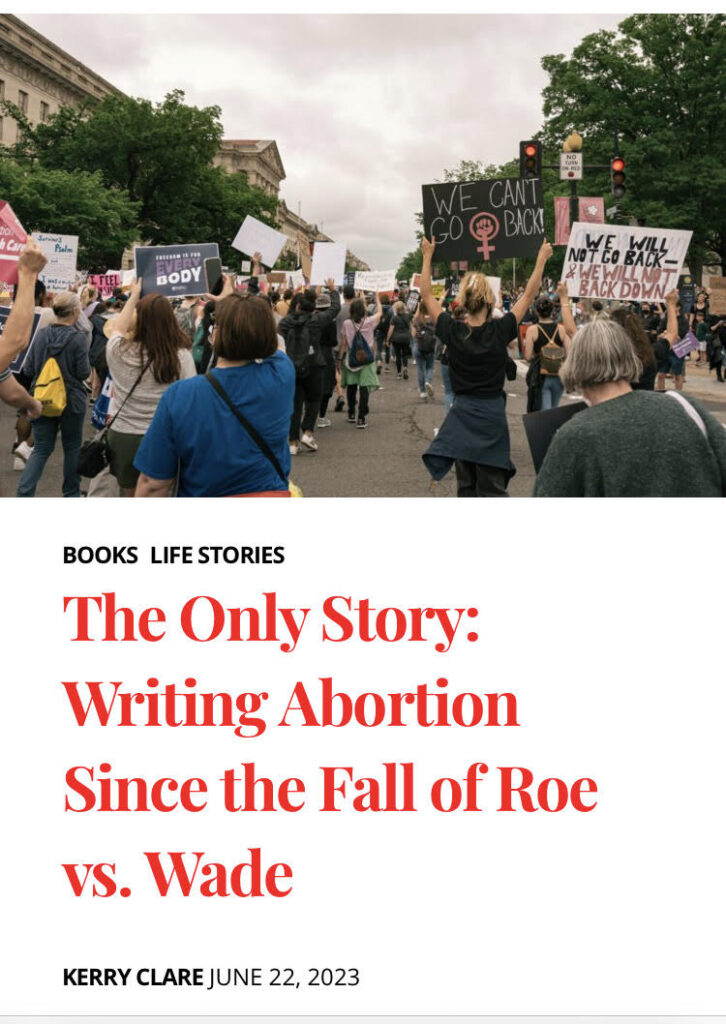
Before last June, it had never occurred to me that Clarence Thomas had a birthday. That he had not, in fact, emerged into the world middle aged, sitting in a room crowded with concerned-seeming people who pronounced “harassment” in surprising ways while telling stories about pubic hairs left on pop cans that were bewildering to my 12-year-old ears, and that I don’t understand any better today.
But it turns out that Clarence Thomas’s birthday is today, June 23, and also the day before mine, which I discovered the morning I turned 43 while hanging out sheets on my clothesline and listening to @mollyjongfast on her political podcast right before I got the terrible news that the US Supreme Court had ended abortion access for millions of Americans.
Happy Birthday, Clarence Thomas…I guess??
Thanks to @shedoesthecity for publishing my essay on the devastation of Roe vs. Wade falling one year ago, but also about how it made me realize how my new novel (ASKING FOR A FRIEND, forthcoming from @doubledayca on September 5) had to end.
June 24, 2022
Take Back the Story
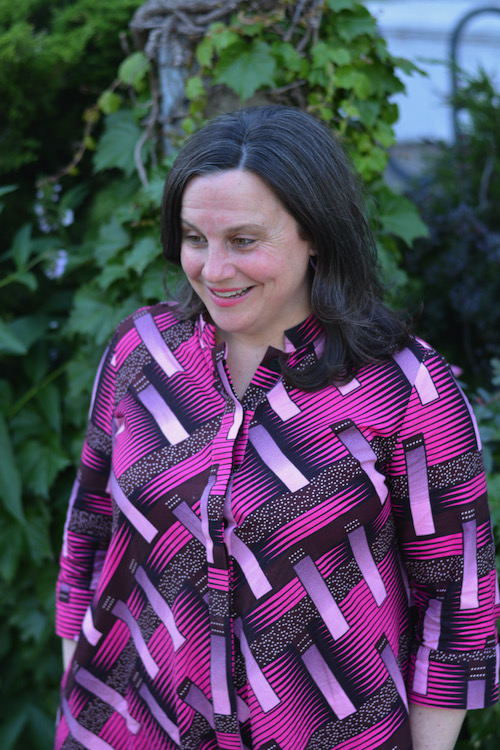
Good morning. Today is my birthday, and the US Supreme Court has overturned Roe Vs. Wade, which makes this birthday even *more* disheartening than the one I spent in 2016 on the day after the Brexit Vote, if such a thing is possible. But perhaps the Supreme Court timed it to coincide with the twentieth anniversary of the birthday when I was pregnant by accident, but didn’t know it yet. The birthday I spent imagining myself on the cusp of incredible new horizons as I’d just graduated from university and was set to venture out into the world with just a giant backpack, but then all those dreams were derailed by faulty birth control, and it was all such a nightmare, so stressful and unbelievably sad, and I don’t remember these emotions at all, but I happened to write them all down in a diary that I was flipping through last night, so there’s evidence. The list of things to do I’d scrawled down around that time included, “Stop crying all the time.” And I eventually did, because I was able to choose my own destiny, to own my own soul, my life. How fortunate was I to be pregnant at a moment some were still describing as “post-feminist,” when it literally never occurred to me that my right and access to an abortion was something that was up for debate. That my reproductive healthcare was anyone’s business except my own.
From my essay, Doubleness Clarifies: It is essential for my purposes that you be able to imagine the desperation of being pregnant when you don’t want to be, of what it is to be staring into that gaping black hole with everything you’ve ever worked and longed for lost inside it.
Here’s what you can do: If you have had an abortion, learn to talk about it so you can speak up and advocate for people like us, even quietly and privately. If your partner had an abortion, speak up and demonstrate that this matters to you. If your ex-partner had an abortion, speak up and demonstrate that this matters to you. Tell your story, and break the stigma that permits abortion stories to remain in the dark, obfuscating the reality that most adult women will have an abortion in their lifetimes. Obfuscating the reality that abortion is normal, and that so many of us have the lives we do because abortion was a gift.
If you’re Canadian, and you have an anti-choice representative in government at the Federal or Provincial level, write them a letter. Campaign for pro-choice candidates in these ridings. Support Abortion Rights organizations in Canada by donating funds. Learn more about why this isn’t just a fringe issue, and why it matters so much—start listening to @aborshpod because it’s wonderful.
If you think this story isn’t about you, your kidding yourself. If you’d like to learn how you might be brave enough to speak out (it took me more than a decade!), DM and I’d be happy to talk.
Don’t be quiet. Don’t be silent. As Ali Smith wrote, “Whoever makes up the story makes up the world.” It’s time for so many of us to take the story back because it belongs to us, and it’s a story that’s proud, and brave, and hard, and real. And I’m so grateful for it.
June 2, 2022
Swimsuits are for Swimming
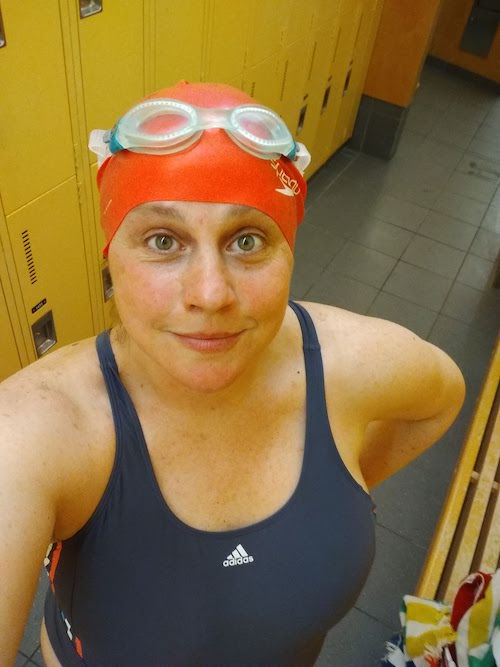
I bought a bathing suit online a while back, and it probably could have been a size bigger.
But I’m very pleased to announce that after about six weeks of consistent workouts via swimming laps, it finally mostly fits me properly.
Not because my body has changed at all, but because six weeks of wearing a bathing suit (and running in through the spinner) is going to stretch a garment out.
Six years into regular swimming, my relationship to bathing suits is much less fraught that it used to be. I don’t actually remember if it ever was so fraught, but this is such a common trope, women trying on bathing suits and hating their bodies, that it’s probably embedded in my DNA.
I do remember that buying a Speedo tankini when I was in university that quickly ended up with a hole in the bum.
I took it back to the store, and the clerk informed me that it had disintegrated because I’d been wearing it to swim.
“It’s not a swimming bathing suit,” she told me. “It’s a fashion bathing suit.”
And these days, my bathing suits have no style at all, basic sporty numbers I can find in my size on clearance. For a couple of summers, for style, I’ve bought a cheap but cute suit from Joe Fresh, but these became stretched out and unwearable so quickly that I’m not sure they’re really worth it.
These days how I look in a bathing suit is an idea that just never comes up.
(Although I took heart when I saw Yumi Nu on the cover of Sports Illustrated recently. Her swimsuit didn’t really fit either, and she still looked pretty fine.)
I honestly never ever think about how I look in a bathing suit, which is bonkers because I wear a bathing suit almost every day. Because a bathing suit is a bathing suit, tight and gaping, revealing. But I never think about how I look in a bathing suit because it doesn’t matter how I look like in a bathing suit.
What matters is what I do.
That I SWIM.
The transformation from object to subject is complete.
March 9, 2022
On Entitlement
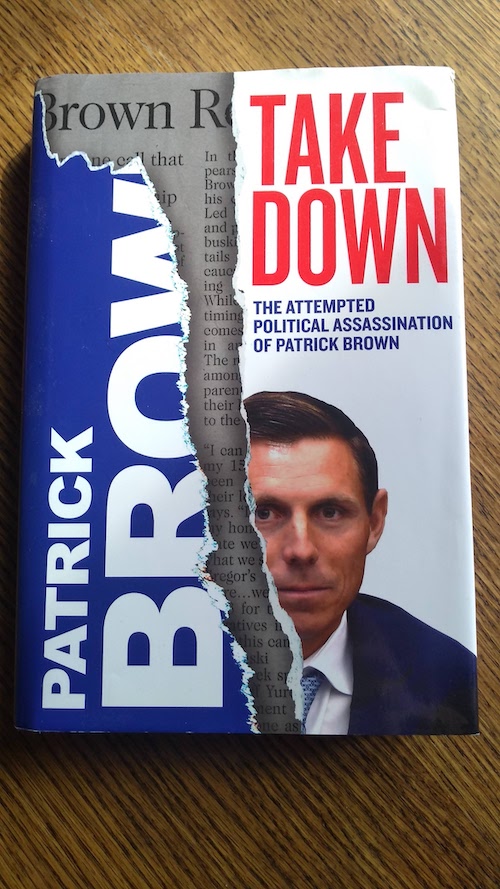
So SOMEBODY is currently making the rounds hoping that his reputation can now be fully rehabilitated, especially after the sexual assault charges against him that (temporarily) derailed his political career back in 2018 have fallen apart. And fair enough. But as someone who has read his terrible autobiography (which is the worst typeset document in the history of documents), I would like to underline that the specific assault charges, to some of us, were never the point. Instead, it was a question of character. The entitlement of a guy who launches his political career with a case of beer at his elite all-boys private high school, who builds a political career with a strategy of unseating female incumbents, who has the fucking audacity to vote to reopen the abortion debate and court the family values crowd—all the while he’s in his thirties and having relationships with women just out of their twenties who work in his office. One of whom he’s now married to, whose secret relationship he only admitted to on the night in 2018 when his whole career came crashing down and suddenly it seemed opportune to be a man with a partner. Who’d be exasperating enough if he were only one guy, except that he’s emblematic of so many mediocre men in positions of leadership who have no idea how irresponsible and reckless it is that they get to have so much power over ordinary people’s lives.
So this is why I don’t feel sorry for Patrick Brown, and that so many people do only underlines the power of “himpathy” (read Kate Manne’s book), and I’ll tell you again that his is the natural trajectory of the men whose “lives are destroyed!” in #MeToo style takedowns, and, finally, if you want to know more about my thoughts on the subject, go read my novel, Waiting for a Star to Fall.
December 2, 2021
The People Who Can’t Understand, But They Do
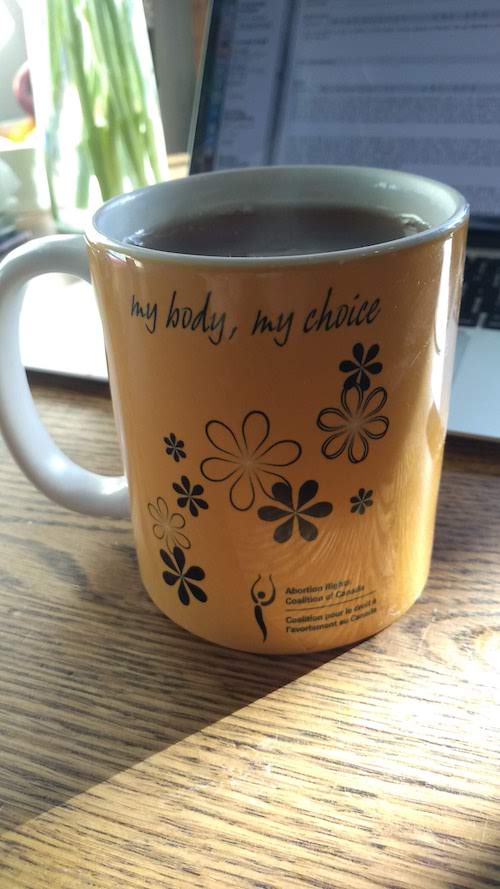
The people I’m grateful for are the people who can’t understand, but they do.
“We share the similarities of our stories, lamenting the invisible pain of women, and I discover the physical side of abortions is the same whether they are unwanted or chosen.” —Joanne Gallant, A WOMB IN THE SHAPE OF A HEART
The people who could never imagine having an abortion themselves, who think they wouldn’t be able to live with themselves if they did. The people whose beloved babies were born at 26 weeks and had to fight for their lives. The people raised in religions where abortion is presented as anathema. People who can’t shake the ableism baked into arguments for reproductive rights. The people who gave birth to their first child at age 17, and it was the best thing that ever happened to them. The people who longed for babies they were never able to have. The people who’ve spent years pummelled by grief at babies lost before six weeks. The people who were themselves adopted and raised in happy families, and who are so glad they’re here.
And I’m not just talking about those people who might have experienced any one or more of these things, and had abortions also, because there are so many of these people. Each of us, of course, contains multitudes.
But no, the I mean the kind of person who would never celebrate abortion, for whom, perhaps, abortion makes their heart hurt.
And yet.
They know that every woman’s circumstance is different. They know they have no idea what it might be to walk a mile in someone else’s shoes. They know that abortion, to so many of us, has nothing but life, our lives, the greatest liberation, to choose our own destinies. (As opposed to those destinies being decided by arbitrary laws, by strangers, or imperfect ideologues who’ve stacked a “supreme” court.)
They know that abortion happens, has always happened, and will continue to happen, even if it has to go on under the cover of darkness. And they know that if this is the case, people will die.
They know that abortions happen least often in places where abortion is most accessible, because in places where abortion is accessible, there also tends to be sexual education, contraception, and women are empowered to make healthy choices.
They know that in spite of our differences, there is still so much common ground, and it is on this common where these people come to support reproductive justice, however quietly.
So that other people can make a different choice.
And that is no small thing.
June 10, 2021
Refreshing
Cheri DiNovo, a former Ontario MPP, and retired Canadian Senator Nancy Ruth make the most interesting literary and political companions in recent books The Queer Evangelist (DiNovo’s new autobiography) and The Unconventional Nancy Ruth (an authorized biography written by Ramona Lumpkin). Both daughters of Toronto but raised in classes that were divided by stratospheres, each woman has made her career out of embracing seeming contradictions, putting principles ahead of political loyalties, and both identify as LGBTQ (DiNovo is bisexual; Ruth is a lesbian). DiNovo may be a proud socialist and Ruth a longtime conservative, but both women have also found a place for themselves within the the Ministry of the United Church of Canada…though within that institution each would prove herself ahead of her time.
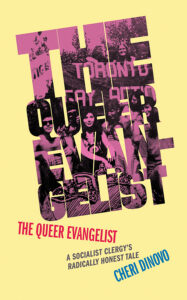
I devoured DiNovo’s memoir in two days after reading an article in the Toronto Star about how she wished to show in her book that change is possible and the fight is worth it. Perhaps unsurprising for someone whose true calling is writing sermons, DiNovo is a wonderful storyteller whose easy, informal sentences make for reading that’s both breezy and inspiring at once. She tells the story of her traumatic childhood, of living on the streets as a teenage drug dealer, of turning her life around after support from a shelter helped her return to education, and then how she went from being a teenage Trotskyist to running her own headhunting firm during the 1980s’ excesses. Her corporate success, however, coupled with its inverse as the 1990s arrived and the economy spilled into recession, led her to spiritual questioning whose answers she eventually began to find in the United Church, where she was ordained as a Minister in 1995. After serving a rural parish, she began to work at an inner-city church in Toronto, helping turn the church’s future around by strengthening its connection to the surrounding community. She performed the first same-sex marriage in Canada in 2001. In 2006, she was elected as MPP for Parkdale-High Park in Toronto, a position she would serve in until 2018.

I reviewed the biography of Ruth for Quill and Quire, and you can read my piece right here. Ruth’s childhood was not the hardscrabble experience of DiNovo, but it was difficult and traumatic in its own way, and she faced her own struggles to find her place in the world, though she always had her family fortunes to fall back on. After inheriting her family money, Ruth devotes herself to philanthropy, supporting causes promoting women’s empowerment. She runs for office twice for the Conservative party, but is both times defeated. In 2005, however, she was appointed to the Canadian Senate, where she used her power from within as she always had—to advocate and agitate for progressive change.
What I find most refreshing about both women is the ways that they managed to get things done by reaching across party lines. In the Ruth bio, it’s noted that she donated to the leadership campaign of Ontario Liberal Lyn McLeod when she herself was a candidate for the Progressive Conservative Party, because she wanted to see women in positions of power everywhere. DiNovo was able to work with members of other parties to get significant bills passed in the Ontario legislature even when the NDP was in a third-party position. Both DiNovo and Ruth are far more interested in enacting policy change to improve the lives of vulnerable people than adhering to a party line, or ensuring an election win—and in their doggedness, they really do prove that real change is possible.